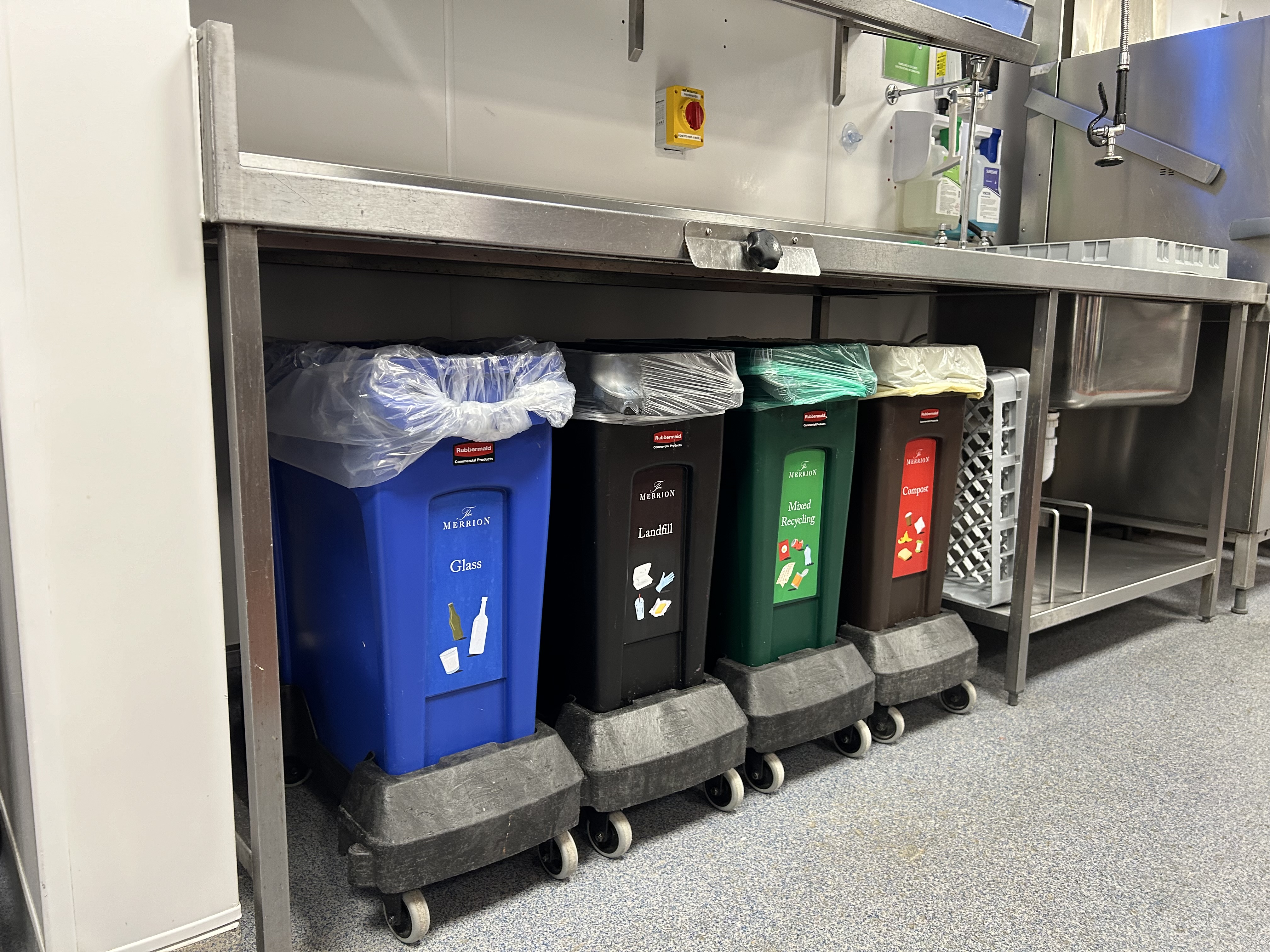
When it comes to recycling, there are two assumptions that a lot of hospitality operators are working from right now.
The first: we've already sorted our recycling out. The bins are there, the collections are happening, we moved on.
The second: the chances of actually being caught out are slim enough not to worry about.
Both assumptions are worth revisiting. Here's why.
According to a report by letsrecycle.com in May 2026, industry figures showed that 273 businesses were anonymously reported to the Environment Agency via its Simpler Recycling non-compliance reporting tool in the first year the rules were in force*. Of those, 246 organisations received advisory notices from the EA. Those anonymous reports can come from anyone who visits your venue, whether they're a guest, waste collector, or member of staff.
That is not a theoretical risk. That is enforcement happening in the first twelve months.
What sharpens this further is the financial aspect. From February 2026, the EA introduced a £118 per hour time-and-materials charge for regulatory compliance assessment activity linked to non-compliance.
In this blog we’ll set out what the current recycling legislations means for hospitality venues, and how to check if your waste management is compliant.
Simpler Recycling came into force on 31 March 2025 for all businesses with 10 or more full-time equivalent employees in England. As a quick reminder on the requirements, every workplace must separate the following before collection:
Dry recyclable materials: plastic, metal, glass
Paper and card
Food waste
Non-recyclable general waste
That requirement covers waste from employees, customers, and visitors, across guest-facing and back-of-house areas.
From 31 March 2027, micro-firms with fewer than 10 full-time equivalent employees will also fall within scope. For most hospitality businesses this does not change your immediate position, but the expanding scope is a clear signal that the rules are bedding in and that enforcement activity will grow as more businesses come into the frame.
The challenge for hospitality waste management is operational: multiple waste streams running simultaneously, across different parts of the building, handled by different teams at different times of day.
Kitchen food waste, front-of-house guest bins, glass recycling from the bar, back-of-house general waste - each one needs to be correctly separated. In a busy service environment, that is harder to maintain consistently than it is to set up once.
Visible, clearly labelled separation - the right bins in the right places, used correctly by staff and guests – sets you up for recycling success, and is also the most straightforward evidence that you are compliant. Where that is not in place, or where labelling is unclear, the gap between intention and practice becomes harder to defend.
If there is any doubt about whether your current setup is genuinely compliant - not roughly compliant, but compliant in the way it would hold up if someone looked closely - it is worth a proper check before a report prompts one for you.
Our Recyclopedia hub covers what can and cannot be recycled, how to think about separating waste streams correctly, and how to set up a system that works in practice. For operators who want to move from roughly in order to genuinely covered, it is a practical place to start.
With the legislation already in place and the non-compliance reporting platform open, checking your recycling setup is compliant needs to be a priority – not something pushed to next year. Recyclopedia gives you that start. Or for tailored support specific to your venue, reach out to our expert team.
* https://www.letsrecycle.com/news/exclusive-hundreds-caught-in-simpler-recycling-rule-breach-checks/
Share on Social Media