For many warehousing and logistics businesses, the biggest risk linked to Simpler Recycling isn't a fine. It's the hidden impact on reputation, operational costs, and customer trust.
As waste regulations evolve across England, facilities are under increasing pressure to improve waste segregation and reduce contamination. But while legislation is driving change, the real business impact often comes not from the regulator's office, but from the audit report, the client review, and the waste contractor's rejection notice.
What is Simpler Recycling?
The UK's Simpler Recycling legislation aims to standardise recycling practices across businesses and workplaces in England. Since March 2025, organisations have been required to separate dry recyclables, paper and card, food waste, and general waste prior to collection by a waste contractor.
The goal is straightforward: reduce contamination and improve recycling performance nationwide. But for many facilities, the gap between understanding the requirement and executing it consistently is wider than it looks.
Why businesses should care about waste contamination
Most facilities don't realise how much contamination is already costing them.
When waste is incorrectly sorted, it can trigger rejected collections, additional charges from your waste contractor, higher general waste disposal costs, and lost recycling rebates. With landfill tax continuing to rise1, the financial case for getting this right is only getting stronger.
But the financial impact goes further than disposal costs. When contamination becomes routine across shifts, it starts appearing in contractor reports. Those reports create a paper trail. And in an environment where Digital Waste Tracking is set to become mandatory from October 2026 - creating auditable, timestamped records of waste movements across your supply chain - that paper trail will be a great deal harder to manage quietly.
The facilities that are most exposed are those that have absorbed these costs without acting on them. Because once those records are auditable, what was an internal operational issue becomes visible to clients, investors, and auditors.
The reputational risk is growing
Today's customers, employees, and partners expect businesses to take sustainability seriously. Overflowing bins, poorly managed recycling stations, or visible contamination issues send a clear message - and not a good one. And that message gets seen by everyone who visits your site, including auditors and clients.
Poor waste management can affect brand perception, customer confidence, environmental targets, and the ability to win or retain contracts with partners who have their own sustainability goals to meet.
This is especially relevant to partners who are concerned with Scope 3 emissions. They need logistics suppliers who can match those sustainability commitments. Because if you’re not compliant with recycling, it could make partners worry that you might be a compliance risk with their work too.
As ESG reporting requirements tighten, businesses that haven't invested in better systems will find themselves behind competitors who have, and potentially losing contracts to those competitors.
Why most warehousing facilities still get waste segregation wrong
The issue usually isn't awareness. Most facilities know they need to segregate waste correctly. The problem is execution.
Confusing bin layouts, poor or absent signage, inconsistent systems across sites, low-quality equipment, and limited employee engagement all create the conditions for contamination to become routine rather than exceptional. When your people are managing high pick rates under pressure, even a well-intentioned system will fail if it requires too much thought at the point of use.
Multiply that over several teams and different shifts, and those small weaknesses in the waste management process quickly become a serious issue. When an issue happens regularly across shifts, it becomes a routine sight in your audits and contractor reports too, and impacts your reputation every time.
The disposal choice needs to be the obvious choice, every time - regardless of who is using the system, how long they've been in the role, or how busy the shift is.
How smarter waste systems reduce risk
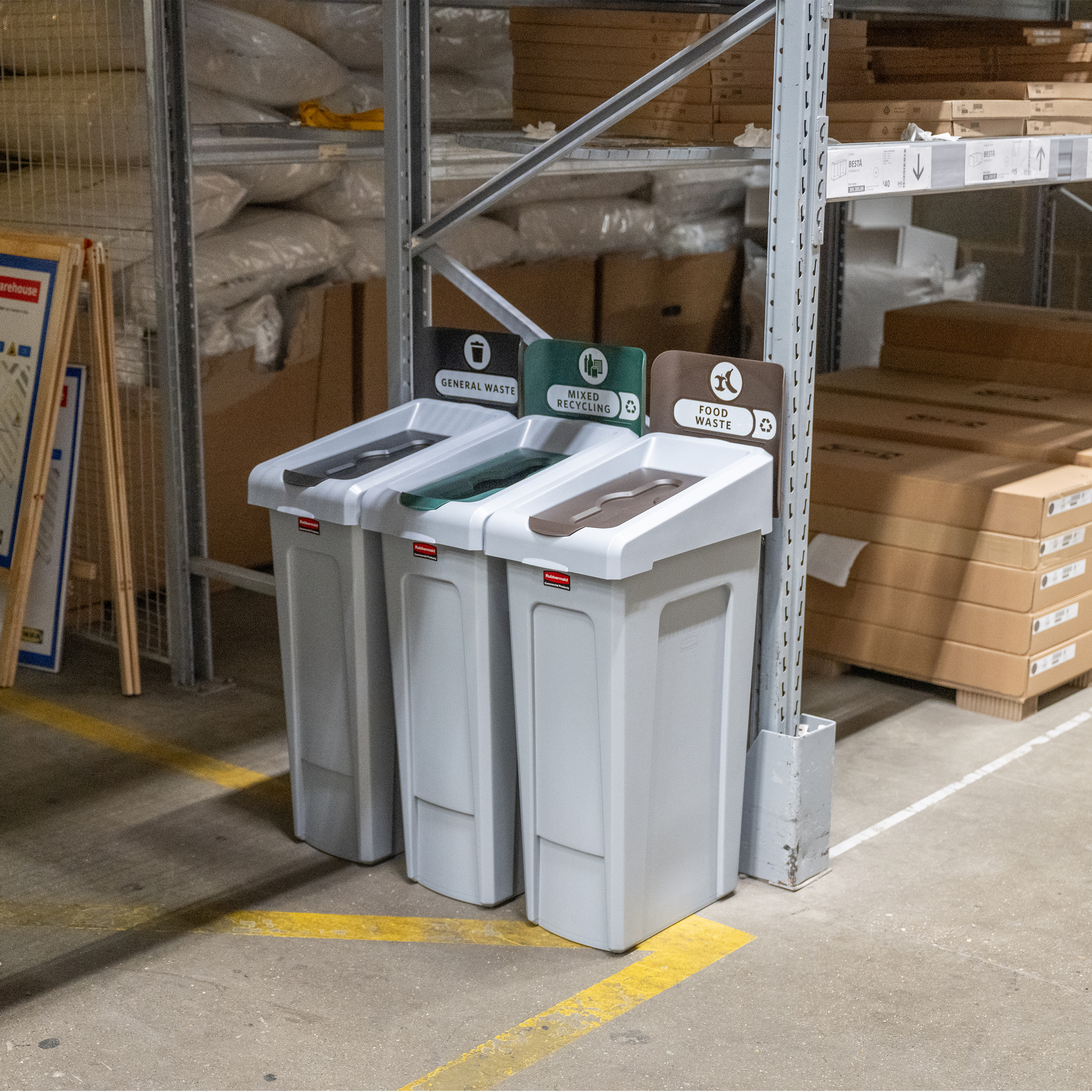
The facilities we’ve worked with that have cut their contamination and improved recycling rates shared a similar approach. They use clearly labelled recycling stations with colour-coded waste streams. They place bins where waste is actually generated, like at packing stations and loading bays, not at a single collection point that adds effort to an already busy shift. And they use durable, well-designed equipment that keeps performing in high-traffic environments without constant repair or replacement.
Infrastructure that is well-maintained, clearly signed, and consistently used doesn't just improve recycling rates. It also demonstrates to auditors and clients that your operation is managed to a high standard. That's relevant when a client team walks your site, when an audit is conducted, and when a waste contractor's report is reviewed. Low contamination rates and reliable systems are evidence that your facility is under control - and that evidence matters in contract reviews and tender processes.
This kind of infrastructure also positions you ahead of what's coming. With the requirement to separately collect plastic film packaging - including pallet wrap and bubble wrap - arriving in March 2027, facilities that have invested in robust, scalable waste systems now will be better placed to absorb that additional requirement without disruption.
Do you know what your waste is really costing you?
Many businesses receive contamination reports from their waste providers, but few actively review or act on them. That's a missed opportunity.
A ‘waste walk’ is a practical starting point. By walking your facility and reviewing how waste actually moves through it, you can identify contamination hotspots, waste flow inefficiencies, hidden operational costs, and clear opportunities to improve recycling performance. It also lets you see what your clients and auditors see, giving you a clearer view of the issues that would show up in reports, and understanding how your facility comes across to external teams.
A waste walk doesn't require specialist knowledge. It requires an honest look at what your current system is actually delivering - and whether that's going to be enough as legislative requirements continue to develop.
For guidance on building a waste management system that works under pressure, visit our Recyclopedia hub.
Sources:
Landfill Tax: increase in rates from 1 April 2026, HMRC https://www.gov.uk/government/publications/landfill-tax-rates-for-2026-to-2027/landfill-tax-increase-in-rates-from-1-april-2026
Share on Social Media