Staff turnover remains an important consideration for warehouse and logistics operations, influenced by factors such as working hours, career progression opportunities, and pay.
If you’re running a busy warehouse, you’re no doubt already familiar with some of the issues this creates. From recruitment and onboarding to the time it takes for a new starter to find their feet - turnover has a direct impact on your operation.
But there’s one cost that rarely makes it onto people’s radar, but it could be quietly undermining one of your most important operational systems…
When staff change, recycling suffers
Since the implementation of Simpler Recycling in March 2025, and with more legislative changes on the horizon, waste management has become a key concern for facilities.
You’ve no doubt already upgraded your equipment, invested in signage and trained your staff. But over time, as your team evolves and people leave, that knowledge walks out the door with them. The result? Contamination creeps back in, recycling rates go down, and your carefully constructed waste management system begins to fall apart.
THE KNOWLEDGE GAP NOBODY TALKS ABOUT
Think back to when your waste management system was first introduced. In all likelihood, it probably involved dedicated training, an explanation of what’s happening and why, perhaps even a walk-through of the new bins and waste streams. For the people who were there at the time, it made sense. They understood the why as much as the what.
But what about the member of staff who joined three months later? Or the seasonal worker covering the Christmas rush?
In many warehouses, these people don’t benefit from the same guidance on waste and recycling, they’re just trusted to get on with the job. And they do their best. But without context or dedicated training, mistakes are inevitable. In industrial businesses, where turnover is high, even the smallest mistakes compound over time to have a big impact.
Contamination is the silent killer of your waste management system. When waste is put in the wrong bin and cannot be recycled this not only has an environmental impact, but a financial one too as your waste contractor will charge significantly more for general waste than recyclables – not what you need when landfill tax has just gone up.
HOW TO BRIDGE THE GAP
Reading this, it might be tempting to see the impact of turnover on recycling rates as a training issue - something that can be fixed with a refresher session or an extra element of onboarding. And while that will undoubtedly help to close the gap, the reality is that in industrial environments where pressure is high and staff need to work quickly, there isn’t much time to dedicate to recycling training.
Instead, you need to build a system that’s intuitive.
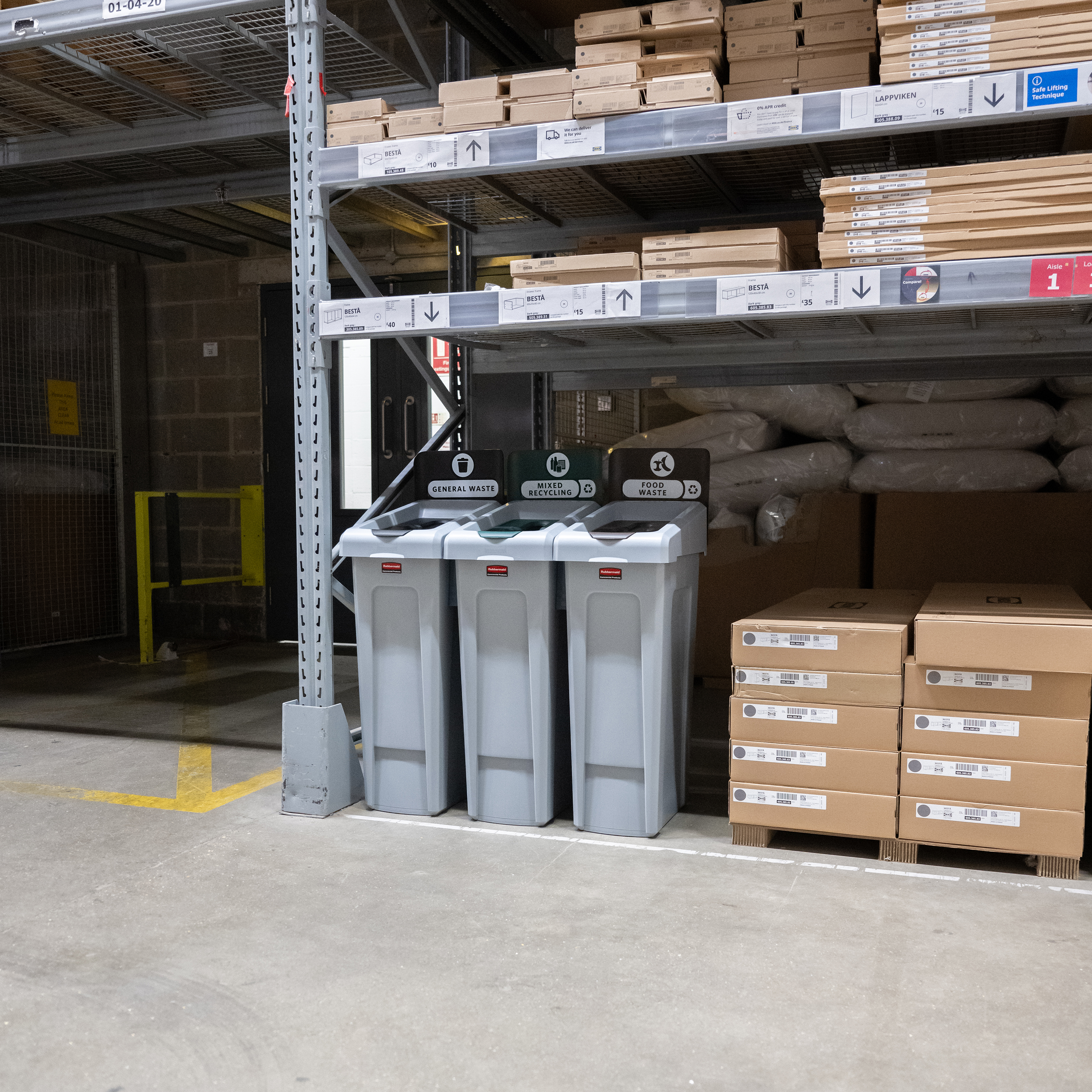
The very best waste management setups are easy to use, because they make the correct choice obvious, no matter who is using them or how long they’ve been in the role – or even what language they speak.
That starts with signage and clear labelling. The key is to make it easy to follow at a glance, because in the middle of a busy shift, your people don’t have time to stop and remember what they were told in a briefing three months ago.
This is more important than businesses realise. Decision fatigue is real, especially when your people are managing multiple demands against the clock. Even small moments of indecision become an opportunity for error, so you need to eliminate them before they happen.
Good signage achieves this by creating a consistent experience across your entire organisation. When you combine colour-coding, simple iconography and clear text your people instinctively know what goes where. It’s a simple principle, but one that has a significant impact on reducing contamination. You can customise your own labels using our Label Customisation Tool.
DESIGN OUT THE CONFUSION
Beyond labelling, the physical design of your waste management system and the equipment you use also plays a crucial role.
By putting bins where they’re needed the most, you make it easy for people to separate waste at the point of collection, rather than adding extra effort into their already busy shifts. The actual design of the bins you use is also essential. Apertures that only accept certain types of waste, colour-coded lids, and separate compartments for different streams are the kind of features businesses should look out for. Because when your infrastructure is doing the heavy lifting, the pressure on individuals to make the right decision under pressure is reduced. And that means your system will keep performing, no matter who’s using it. For expert guidance on recycling optimisation, explore our Recyclopedia hub of free resources.
BUILD A SYSTEM FOR THE TEAM YOU HAVE, NOT JUST THE TEAM YOU TRAINED
Sadly, high staff turnover doesn't look like it’s going to go away anytime soon. For most organisations, it’s simply the reality of doing business. The same can be said about recycling. What started with Simpler Recycling is set to continue with more legislative changes scheduled to come into effect in the coming years.
To meet these dual challenges, businesses need to build systems that are resilient enough to absorb change and clear enough to ensure that anyone can use it. This is where clear, intuitive waste management solutions deliver by helping you to improve recycling rates and reduce contamination, no matter who’s using them.
After all, the very best recycling system isn’t one that works well when everything is going to plan. It’s one that keeps delivering even when it doesn’t.
Looking for help to overcome the impact of staff turnover in your organisation? Recyclopedia can help. It’s filled with information, advice and best practice to help you design a waste management system that works for your venue.
Share on Social Media