The hospitality industry is no stranger to pressure. But right now, the combination of rising costs, tighter margins and increasingly complex legislation is forcing businesses to think differently about how they operate.
With as many as six hospitality businesses being forced to shut their doors every single day, venues are working harder than ever to make every penny count. As a result, operational efficiency is no longer a nice-to-have, it’s a survival tactic.
The problem is that inefficiency is rarely easy to spot. It hides in the gaps between spreadsheets, in the processes that have always been done a certain way and the equipment that’s just about up to the job. And by the time it actually becomes visible, it's already costing you more than you realise.
The real cost of running inefficiently
As prices have risen and margins shrunk, hospitality businesses have begun to take a serious look at cutting costs wherever possible. As they have, attention has turned to the obvious levers: staffing, energy consumption and food waste. But some of the most damaging inefficiencies are hiding in areas that rarely get the same level of scrutiny, and waste management is one of them.
Yet, for a busy venue, inefficient waste management operations can cause a ripple effect that impacts just about every area of your operation.
Where to find inefficiency in your waste management set up
The first place to look is bin placement. When bins aren't positioned where waste is actually generated, staff have to travel further to deposit it. In a busy kitchen or front-of-house environment, those extra steps add up across every shift and every day into a measurable drag on productivity. And in larger venues, the impact compounds even further.
Contamination is another place you’ll find the effect of inefficiency. When recycling streams aren't clearly separated through colour coding, labelling or bin design, mistakes become almost inevitable. All it takes is one piece of plastic wrap in the cardboard stream, one bottle cap in the glass and suddenly your carefully separated waste ends up contaminated. This isn’t just bad news for the environment, it’s bad news for your bottom line as it can lead to increased costs from your waste management contractor as contaminated waste cannot be recycled – not something you want to happen when landfill taxes have just increased.
Finally, there’s equipment failure. Bins, trolleys and transport equipment that weren't built for the demands of a commercial hospitality environment will degrade quickly. Lids crack. Mechanisms jam. Seals fail. Each of these costs money to replace. It also creates its own knock-on problem that can drive up costs, whether that's a hygiene risk in the kitchen, a pest issue in the back of house, or waste sitting where customers can see it because your equipment isn’t up to the job.
Efficiency starts with the right infrastructure
Addressing these issues requires a shift in how you think about your waste management setup, moving from something you spend as little on as possible to something worth investing in thoughtfully.
Start with placement - Map out where waste is generated across your venue and make sure your bins are positioned to intercept it at the source. The goal is to make separation as effortless as possible, so that doing the right thing requires no extra effort from your team.
Look at your labelling - Clear, consistent colour coding and iconography remove the cognitive load from busy staff and eliminate the moments of hesitation that lead to contamination. With our bins you can use our free label customisation tool to create on-brand labels tailored to your business.
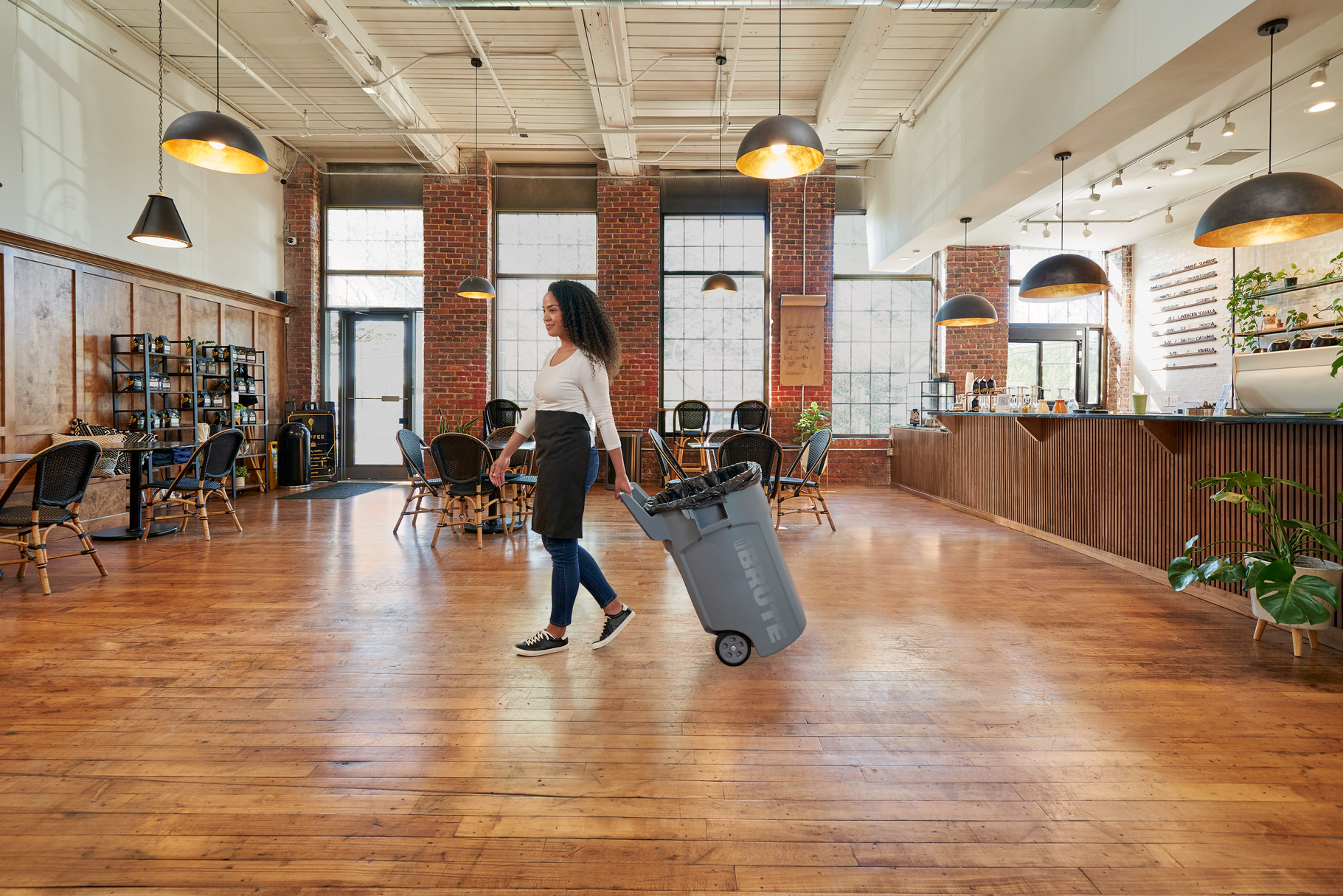
Consider the quality of your equipment - Look for solutions built specifically for commercial hospitality environments with long warranties. That includes pedal bins with lids for food preparation areas, durable food-safe BRUTE® containers for high-volume back-of-house settings, and purpose-built trolleys for moving waste efficiently between internal and external collection points. Designed to perform shift after shift their durability means fewer disruptions, lower replacement costs and a waste management system that actually works for your team.
Efficiency is essential
Sorting your waste management system does more than just cut costs. It frees up your people to focus on the work that actually moves your business forward. In an era when your environmental impact is under greater scrutiny than ever before it also helps to cut contamination and increase recycling rates.
It’s a virtuous cycle. One that won’t just help you to meet the challenges you face today, but those that might arrive in the future too.
Looking to unlock efficiencies at your venue? Our newly launched Recyclopedia is a good place to start. Filled with information, advice and best practice it’s got everything you need to transform your waste management system.
Share on Social Media