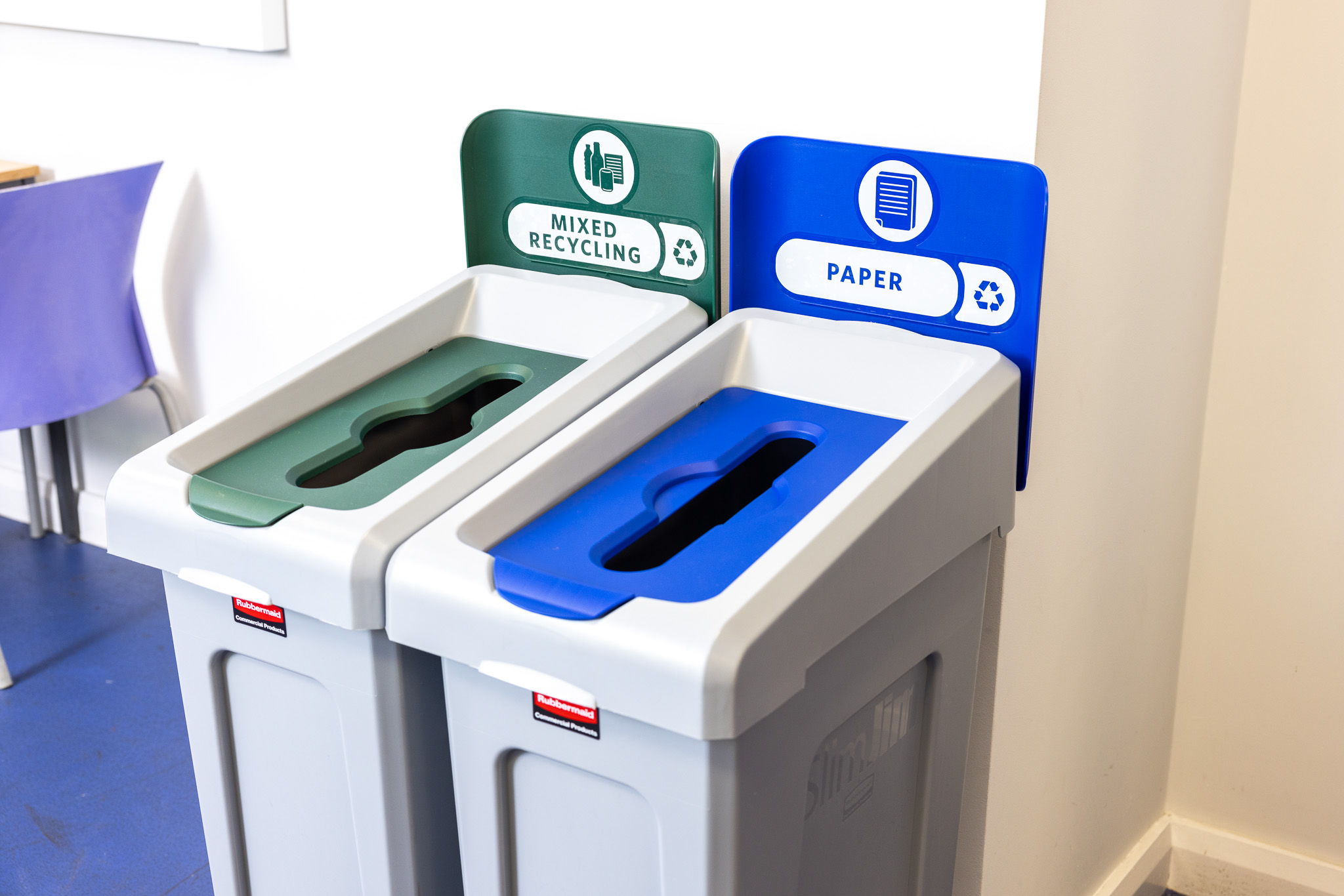
You can buy the best bins on the market. You can position them perfectly, label them clearly and colour-code every waste stream. And you can still find, three months later, that contamination is creeping back in and that your recycling rates aren't where you need them to be.
It's a frustrating experience, and a common one too. Because here's the thing that doesn't always make it into the conversation about waste management - your system is only half the story. The other is your people.
GOOD INTENTIONS AREN'T ENOUGH
People want to do the right thing when it comes to recycling. But good intentions will only take you so far.
During a busy night service, a chef working flat out isn't pausing to consider which stream a piece of packaging belongs in. Likewise, a warehouse picker racing to get orders out the door isn’t stopping to check whether the pallet wrap, straps and cardboard inserts all need to be separated before disposal.
These are the moments that dictate the success or failure of your recycling system. Because when people are under stress and working flat out, they are going to default to whatever is easiest. That’s not an attitude problem, it’s human nature. And if the easiest solution isn't the right one, your system will begin to fall apart.
To some degree, this can be overcome by putting a better system in place. But the real secret to moving the needle on your waste management is to build a better culture.
START WITH WHY, NOT WHAT
The first step to building a better recycling culture is to secure the buy-in from your staff. Yet all too often this is something that venues overlook. They focus on the “what”, not the “why”, leading with mechanics and processes in the belief that a better system will deliver better results.
Your system matters, of course. But if that information isn't grounded in a reason that means something to your team, it won't stick.
Purpose drives decisions, not processes. That means if you want your people to change their behaviour, you need to explain why it matters. We’re not talking about an abstract lesson on saving the planet, however. It needs to be something more personal, something that is directly relevant to them.
Maybe it’s the financial cost of contaminated waste streams. Or your business' sustainability commitments and what those mean. It might simply be that as professionals, they take pride in running a tight, well-managed operation. Whatever it is, you need to tap into it so that it will resonate with your team and drive them onwards.
GIVE PEOPLE OWNERSHIP
Traditionally, organisations take a top-down approach, telling workers what to do in the hope they will follow the systems and processes that have been laid out for them. And that works, until it doesn’t - particularly when the staff changes, seasonal pressures and busy periods that venues face start to take effect. But if you want to build a culture that sustains good habits even in the face of adversity, you need to create a sense of ownership.
When individuals or teams feel a sense of responsibility for how recycling is going in their area, they behave differently. They notice when something isn't right. They course-correct their colleagues without being asked. They take pride in their efforts. These might seem like small shifts in behaviour, but they have a significant impact.
So how do you create this shift in mindset?
People support what they helped to build. So make sure to involve your teams in the design or review of your recycling systems. Other ideas include nominating “Recycling Champions” who help to keep the subject at the front of people’s minds. Or establishing monthly awards that actively recognise teams or staff members who go above and beyond to make waste management work. The key is to make people feel like their actions matter and to give them the acknowledgement they deserve when they make the effort.
KEEP IT VISIBLE, KEEP IT RELEVANT
Even the best cultures aren’t self-fulfilling. So if you want to move the needle on recycling in your business, it’s going to take more than a single briefing or a poster on the wall. Instead, you need to keep the concept of recycling alive, and its importance firmly fixed in your team members’ minds.
Some do this by ensuring that their people are kept up to date on recycling rates and whether the organisation is hitting its targets or not. Others do shout-outs when a team has improved their contamination figures or led the way on recycling.
Legislation provides a useful prompt here, too. With Simpler Recycling now a year old and further changes on the horizon, there's a genuine reason to keep waste management at the front of people’s minds.
THE SYSTEM AND THE CULTURE, TOGETHER
While the right culture can be a powerful tool, none of what we’ve covered here is a reason to ignore the impact of infrastructure. The right bins, in the right places, with the right labelling, remain the foundation of any effective system. Without them, even the strongest culture will struggle. But at the same time, infrastructure without a culture has its own ceiling.
The businesses that truly succeed when it comes to recycling are those that invest in both. They get their setups right, then they get their people to buy into the work, to understand it, believe in it and take ownership. Because that’s when recycling stops being something that your people have to do, and starts becoming second nature.
Do you want to build your own recycling culture? Check out Recyclopedia, our platform which features advice on the kind of systems and training that can transform your approach to waste management.
Share on Social Media