What happens when over 1,000 policymakers, international leaders and waste professionals from every continent get into the same room? Our own waste and recycling expert Ben Clibbery went to the International Solid Waste Association's (ISWA) World Congress in London to find out.
For hospitality and foodservice teams, where kitchens, bars and housekeeping all produce waste at speed, there was plenty to take away.
We caught up with Ben to find out more.
Ben, what stood out for you at ISWA?
Aside from some scary statistics on just how big of an issue waste has become, a total reframing of the word "waste". Waste isn't waste, it's resource in the wrong place. In theory, almost everything can be recycled. The question is whether it's viable, and whether it's in the right place to do so.
Take the food waste that comes out of your kitchen for example. Those scraps are a resource and, with the right separation and processes, could become fertiliser or even fuel.
What did you take away that businesses can act on now?
There were three key things that not only struck me as important but that also felt achievable for businesses to act on now.
Prevention comes first
The most effective way to reduce waste is not to create it in the first place. Recycling and recovery deal with what already exists but the bigger gain is upstream, in what you bring into your business. From the equipment you give your team to the packaging and consumables coming through the door.
Former European Environment Commissioner Janez Potočnik made the same case from the main stage. He argued that reducing demand for materials should be central, and that recycling alone cannot meet growing demand.
Look beyond zero waste
Zero waste was once a badge of honour, but it doesn't tell the full story. I’ve seen several venues proudly claim zero waste, but do they actually understand where this waste ends up? As landfill has become more expensive, waste is often incinerated meaning that any recyclable material is then lost for good. Look at what you consume and find ways to repurpose, reuse or recycle it.
Invest in durability
Potočnik also called for more intensive use of products. Durability is something that has always run through the core of RCP and product design is a core pillar of our environmental strategy, covering longevity, materials, lifecycle and end of life. We’ve recently shared more detail about our Environmental Strategy in this report.
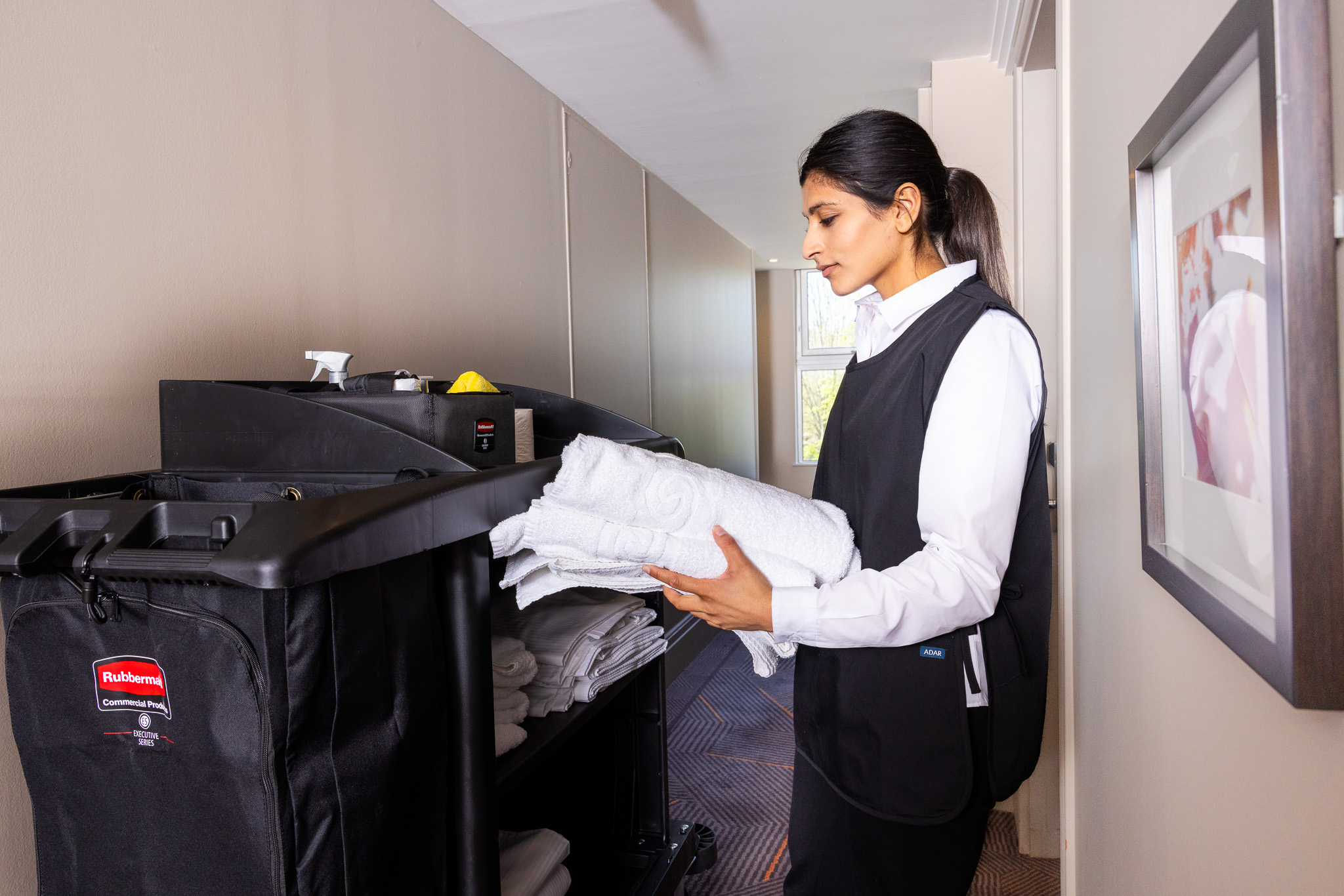
Investing in durable equipment isn’t just the right thing to do for the planet, but it makes sense for business’ bottom lines. Housekeeping trolleys and bins need to stand up to heavy daily use, so products built to last matter.
What is holding businesses back?
We need to scale what already works. Wales recycled 58.6% of its waste in 2024, against 43.8% in England*. The difference? Source separation and in particular keeping food waste apart from general waste.
Most businesses know the baseline. We've been shouting about the benefits of better recycling for a long time, and still, many are not even doing the minimum and I think there are a few reasons.
Short-termism is one - there's still an under-appreciation of investing in quality, in money and in time. We have created a culture of relying on cheaper alternatives, and yes, products built to last cost more up front, but they can help cut costs in the long run, because fewer replacements mean less waste and less resource spent. The last thing you need during a busy service is for equipment to fail. A broken trolley or housekeeping cart will cost you time and valuable resource.
Another is that sustainability and waste management is often shared across several teams, from operations and facilities to procurement and finance. The people closest to it are informed and motivated, but it can be hard to build a credible case for investment that works for everyone. The final decision then sits with someone who might not see the issue day to day, and who needs clear evidence to back the case.
Was there a conversation or idea at ISWA that made you think differently about how RCP supports customers and distribution partners?
There were two things, really.
Firstly, we carried out a little experiment. The venue had no bins on the main floor, so the four we’d brought as display items ended up serving the catering stand. We kept the labels deliberately vague (reflective of what you might see in most facilities) “non-recyclables” and “dry mixed recycling”, and we sat back and watched.
Half of the visitors were able to effectively separate recyclables from non-recyclables, and the other half were nonplussed, many just looked in the bin to see what everyone else had done. So, what does this tell us? Despite published guidance and legislation, we still have a long way to go in terms of education. It’s worth remembering that your guests and staff play a big role in where their waste ends up, and whether it becomes a wasted resource or not.
It also reinforces something we stress to our customer partners all the time: colour coding, iconography and clear labelling make a real difference to how people sort their waste. We’d normally use all three, with logos and specific wording, so nobody has to guess or copy the person before them. With vague labels and only two options, even the experts got it wrong.
Secondly, like the host of ISWA Mark Shayler said: many people say yes but fail to do yes. It’s something we hear a lot: “we can’t because”. We can’t because budgets are tight. We can’t because we have an existing supplier. We can’t because the Environment Agency aren’t enforcing the legislation. But if instead we say “we can if”, we open up the opportunity to build a business case. Many people fall at the first hurdle because it seems like too much work.
I think that’s where Rubbermaid Commercial Products stands out. We go beyond just selling bins and we can turn “we can’t” to “we can”. We provide procurement teams with case studies from across the hospitality sector that demonstrate cost savings, efficiency improvements and saved resources. The team will also take the time to walk your site. We’ll find out what you need and where, offer advice on which bins work best in which locations and how they should be labelled to maximise recycling. Finally, our long warranties mean you can trust them to withstand the demands of the commercial environment.
Finally, what's some practical advice on what businesses can do next?
The key next steps for any business are:
Look at what you produce, then talk to your waste collection partner. They know where your waste goes once it leaves your building and they can give you helpful data.
Discover how other businesses within the hospitality space have been able to make cost, time and resource savings through our case studies.
Pass on what you learn because we all depend on the same resource and planet. Share the information you get from your waste collection partner, and we can work to implement a waste management system completely tailored to your facility's needs. The more we share, the faster what works can scale.
Not sure where to start? Recyclopedia, our online recycling hub, is packed with free resources, guides and tools to help you.
* https://www.gov.uk/government/statistics/uk-waste-data/uk-statistics-on-waste
Share on Social Media


