Every spring, hospitality venues invest significant time and resource into getting ready for outdoor dining and events season. Furniture is brought out, hanging baskets are curated, gazebos are constructed, menus are updated, staff rotas are reorganised. Waste management, however, tends to be an afterthought.
With 69% of UK diners saying they look for an outdoor dining option when choosing where to eat1, it's essential that your venue has a plan to manage the waste created by this seasonal change in operations.
Why outdoor waste management is different
The assumption that indoor waste processes will translate outdoors is one of the most consistent errors facility and operations managers make. Indoor environments are fixed - bin placement is established, staff workflows have a routine, and collection points are integrated into daily operations. With expansion into outdoor areas, waste generation points change, as well as the journey from recycling bins to waste collection bins.
Weather is one of the biggest factors to contend with – and the least predictable. Wind can blow litter around, hot days accelerate odours and increase the risk of pests, while summer showers test how waterproof your signage really is. It moves durability up the priority list.
One thing that doesn’t change, however, is compliance. Legislation like Simpler Recycling is active all year round, with no summer vacations from waste separation. The waste streams you separate indoors need to carry over to your terraces, beer gardens and event spaces. That means choosing waste management solutions that facilitate different waste streams - our Configure™ recycling stations offer a modular, magnetically connected system for covered outdoor areas, with colour-coded stream labels that make correct sorting straightforward for guests.
Where venues are getting it wrong
Many hospitality venues hit the same stumbling blocks when it comes to outdoors waste management. Venues underestimate peak waste volume, deploy insufficient bin capacity, and position bins based on operational convenience rather than where guests actually generate waste.
You may also find that signage that work indoors fail in larger, open outdoor settings, causing contamination rates to rise. Cross-contamination risks unnecessary costs for your business, as landfill waste is more expensive to dispose of.2
Practical steps towards effective waste management
Getting this right means putting in the work before peak season opens, not during it.
Start with a ‘waste walk’ during a low-stakes outdoor dining period before the summer rush really gets going. Observe where waste accumulates, where guests are left without a nearby bin, and where contamination is occurring. Bin placement should follow the guest journey: at the bar, food collection points, condiment stations, and exits.
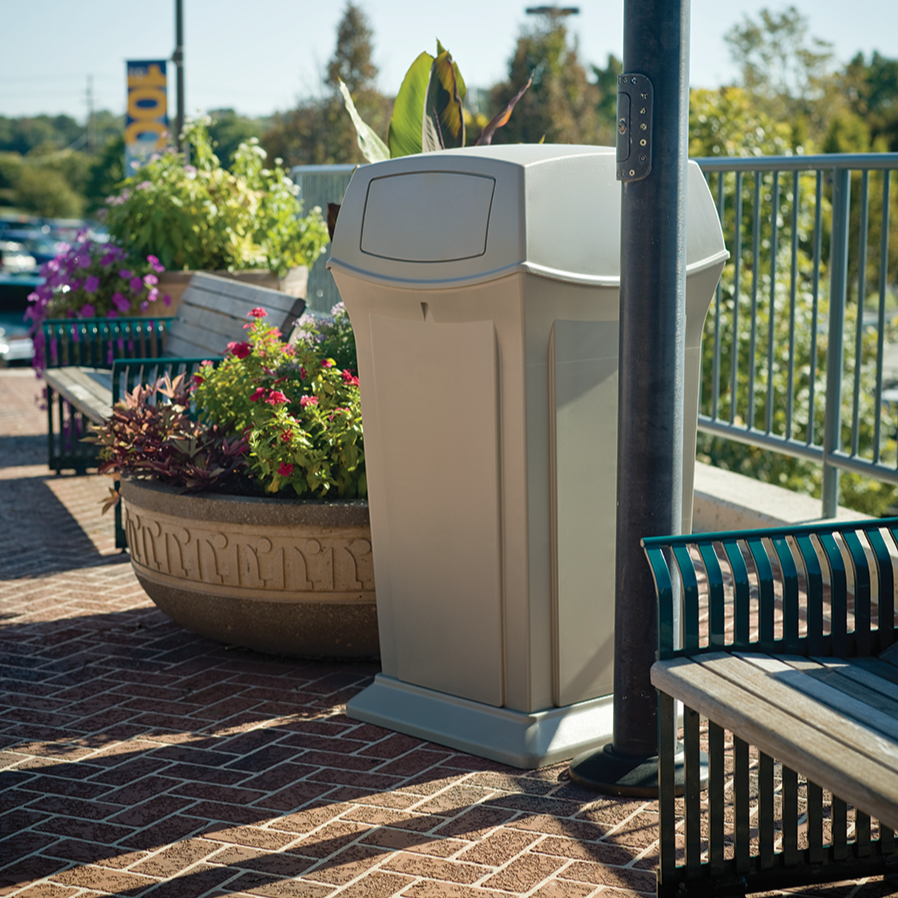
You can then look at getting the right equipment for the right location. Our LANDMARK® container range is designed specifically for outdoor commercial use, with a spring-loaded lid that conceals waste, traps odours, and reduces pest intrusion.
You’ll also need to consider how you move collected waste from those outdoor bins to your main external waste containers, which may be a different or longer route than how you transport waste from indoor bins. Material handling products like our X-Carts and Cube Trucks make it easy to carry heavy loads, while looking smart enough to be used in customer-facing areas.
The venues that manage outdoor waste well are the ones where it is invisible to guests but never invisible to the team. That outcome requires planning, the right equipment, and processes in place before the first busy weekend of the season.
For further guidance on recycling best practice and legislation, visit our Recyclopedia hub, or contact our expert team for tailored guidance.
Sources :
Share on Social Media