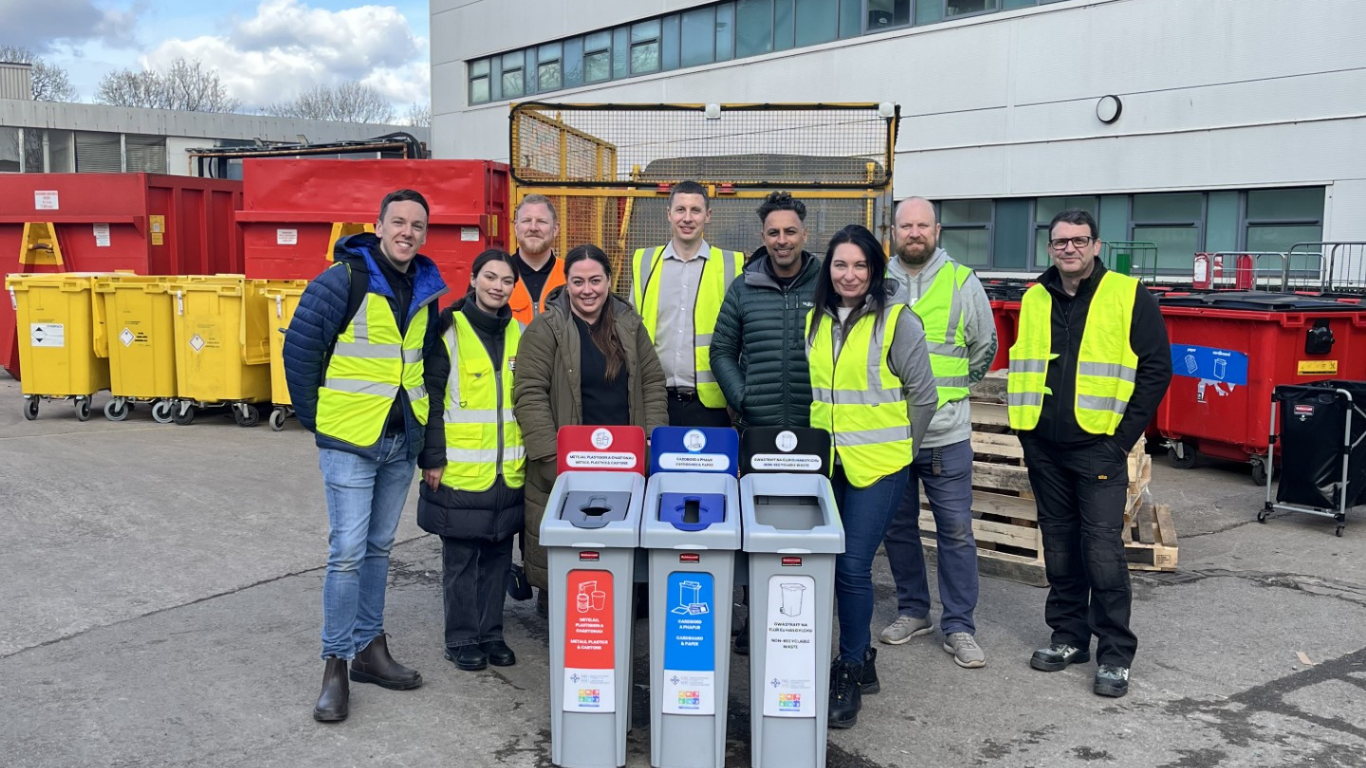
New workplace recycling rules were introduced in Wales in 2024 that required businesses to separate waste into recyclable streams prior to collection. The aim was to increase the rate of recycling and therefore send less waste to landfill. Because of their complexity and large scale, hospitals were given an additional two years before the rules – which are now in effect - applied to their facilities.
Cardiff and Vale University Health Board, which operates University Hospital of Wales (UHW), reached out to us to help them prepare for the new legislation and build a better recycling strategy at the hospital.
Read on to learn how we tackled waste management at one of the UK’s largest hospitals, and the impact that the new strategy had after just six months.
The challenge
UHW is the flagship site of Cardiff and Vale University Health Board and one of the UK’s largest hospitals, with over 1,100 beds.
Hospitals like UHW face specific challenges with waste management, as they need to consider hazards like infectious and radioactive waste, as well as the standard recycling and food waste streams that other facilities handle. Overall, Cardiff and Vale University Health Board is managing as many as 28 different waste streams across their hospitals.
They needed a scalable, durable waste management system that could work across large sites and handle high footfall, while maintaining compliance with the new legislation.
The solution
The first step in our partnership with Cardiff and Vale University Health Board was to conduct a ‘waste walk’ across the hospital. A waste walk is an essential part of our consultation process, where we find key waste generation points in a facility, identify the types of waste being generated, and assess which waste and recycling streams need to be collected in each area. From there, we can put together a waste management strategy that suits the facility, including bins that meet its specific needs.
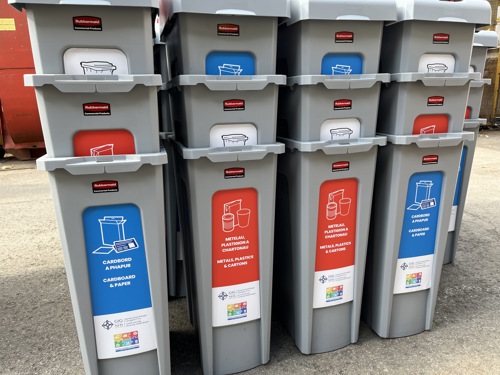
Our Slim Jim® Recycling Station is a modular waste management solution that allows facilities to separate multiple streams in one customisable unit. Its durability, colour coding options and clear customised labels made it the ideal choice for a high-footfall facility like UHW.
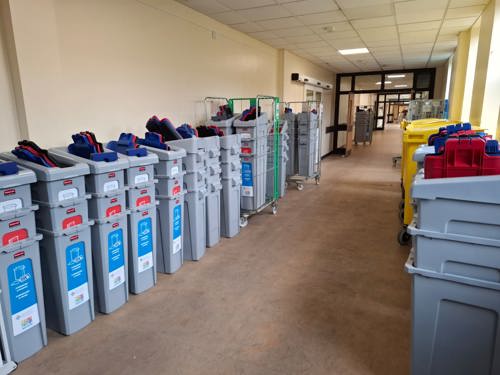
We worked closely with the team to carry out a six-month trial period with the new bins in one ward of the hospital, with another ward keeping the old bins as a control group, to assess the impact of the new waste management system on recycling contamination.
The results
After the six-month trial period on two wards and within a hospital concourse area, the UHW team found that recycling contamination was significantly lower in the ward with Slim Jim® Recycling Stations than the ward with their existing pedal bins. James Randall-Bromley, Head of Waste Compliance and Recycling, explained:
“With the support of the Rubbermaid Commercial Products team - through detailed waste audit data and the implementation of the right solutions - we’ve made significant progress. Last year, 510 tonnes of waste were successfully recycled, with a further 428 tonnes sent to landfill. The contamination rate of these bins is now just over 10%, compared to 49% with traditional pedal bins.”
As well as reducing recycling contamination, the new recycling strategy will help the hospital cut down on CO₂ emissions, which is an important step on their sustainability journey. The health board will save 4,286 kg CO₂, which would have been caused by transportation, as well as approximately another 1000kg CO₂ saved by avoiding 1,400 kg cardboard.
James Randall-Bromley said:
“Sustainability is becoming more important all the time. As a Health Board, we generate around 4,000 tonnes of waste every year - and we have a responsibility to manage that in an environmentally responsible way.”
Share on Social Media