Poor warehouse waste management costs more than you think
Warehouse and factory waste management is not just a compliance issue. Bins that crack under industrial conditions, contamination penalties from your waste contractor, and operatives walking too far to reach recycling points all add cost to every shift. Getting the setup right protects your people, your operation, and your bottom line.
WHERE warehouse waste management GOES WRONG
Waste management on industrial sites affects safety, throughput, compliance, and cost. These are the four areas where facilities run into the most trouble.
Safety hazards
Throughput loss
Compliance risk
Contamination fees
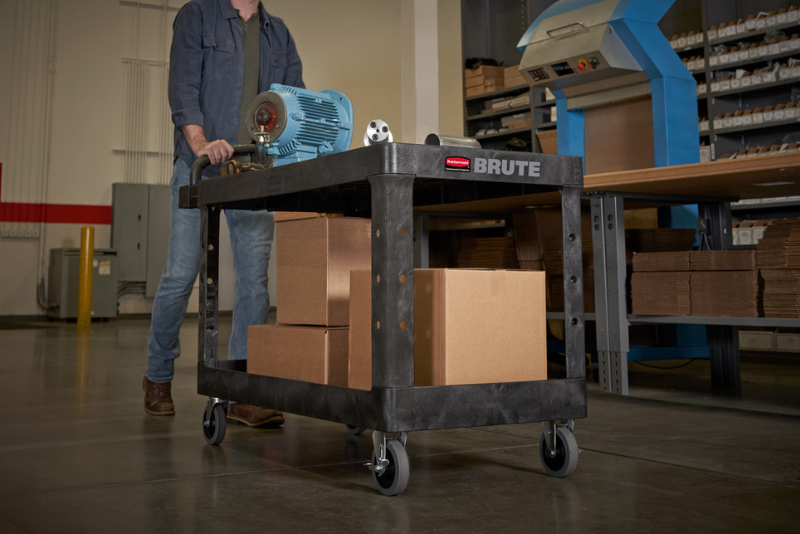
Bins that crack or shatter under forklift impact create foreign object debris on the warehouse floor. That is not a maintenance issue - it is a safety incident waiting to happen. Infrastructure built to withstand industrial conditions eliminates this risk before it reaches your incident
See Durable Solutions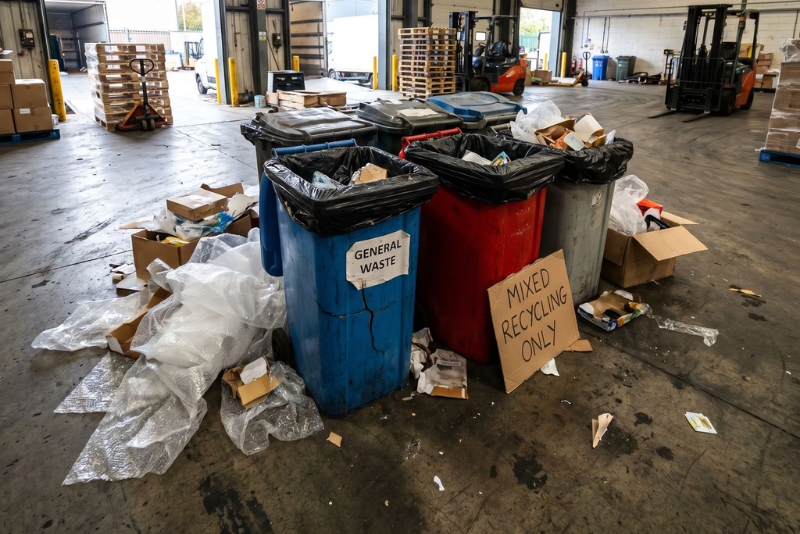
Every time an operative walks further than necessary to reach a recycling point, productive time is lost. On a busy warehouse floor, poorly positioned waste stations create LEAN violations that add up to hundreds of lost picks per day. Point-of-use placement fixes this.
Improve Efficiency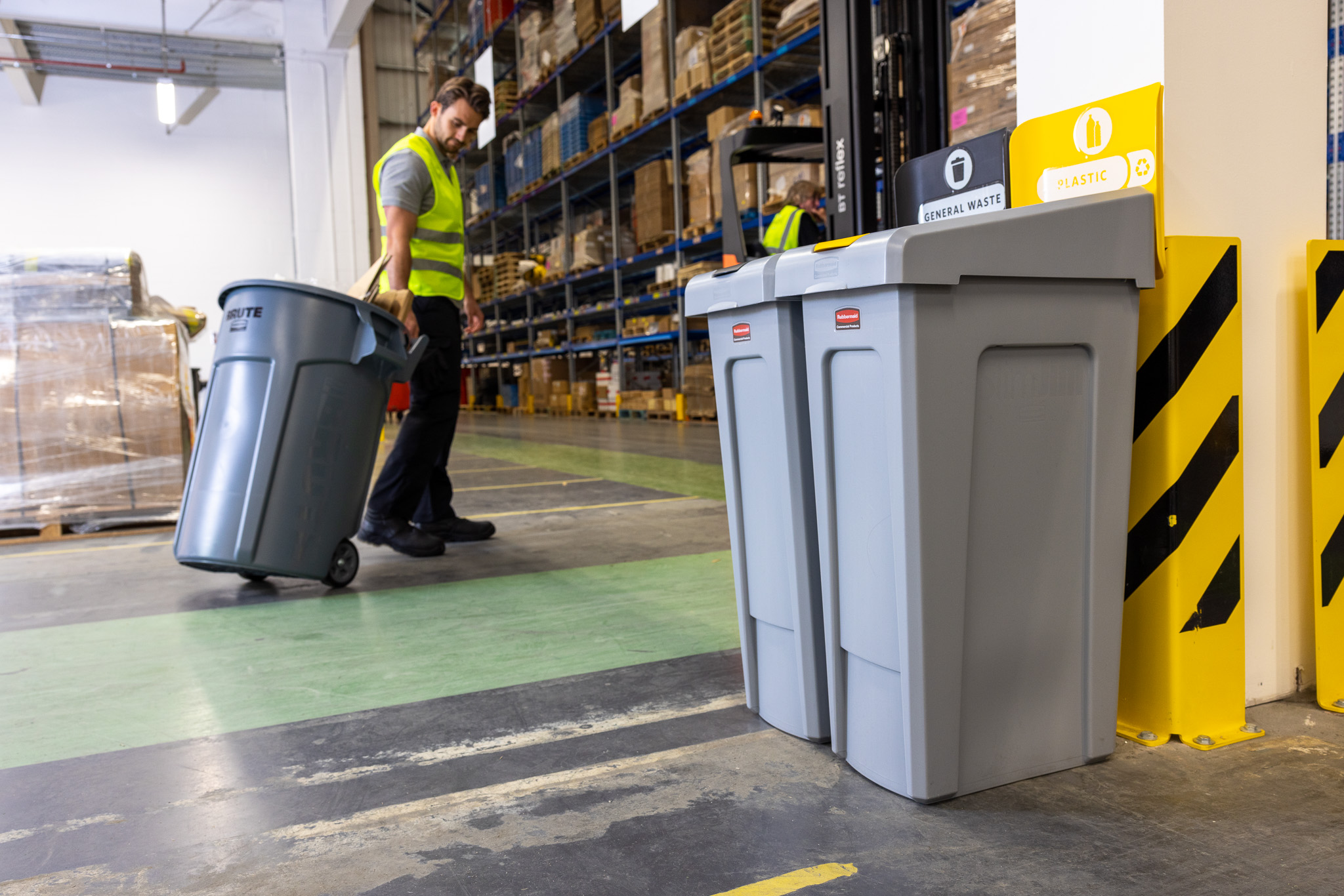
Since 31 March 2025, businesses in England with 10 or more full-time employees must separate dry recyclables, paper and card, food waste, and general waste before collection under Simpler Recycling legislation. Industrial facilities are fully in scope.
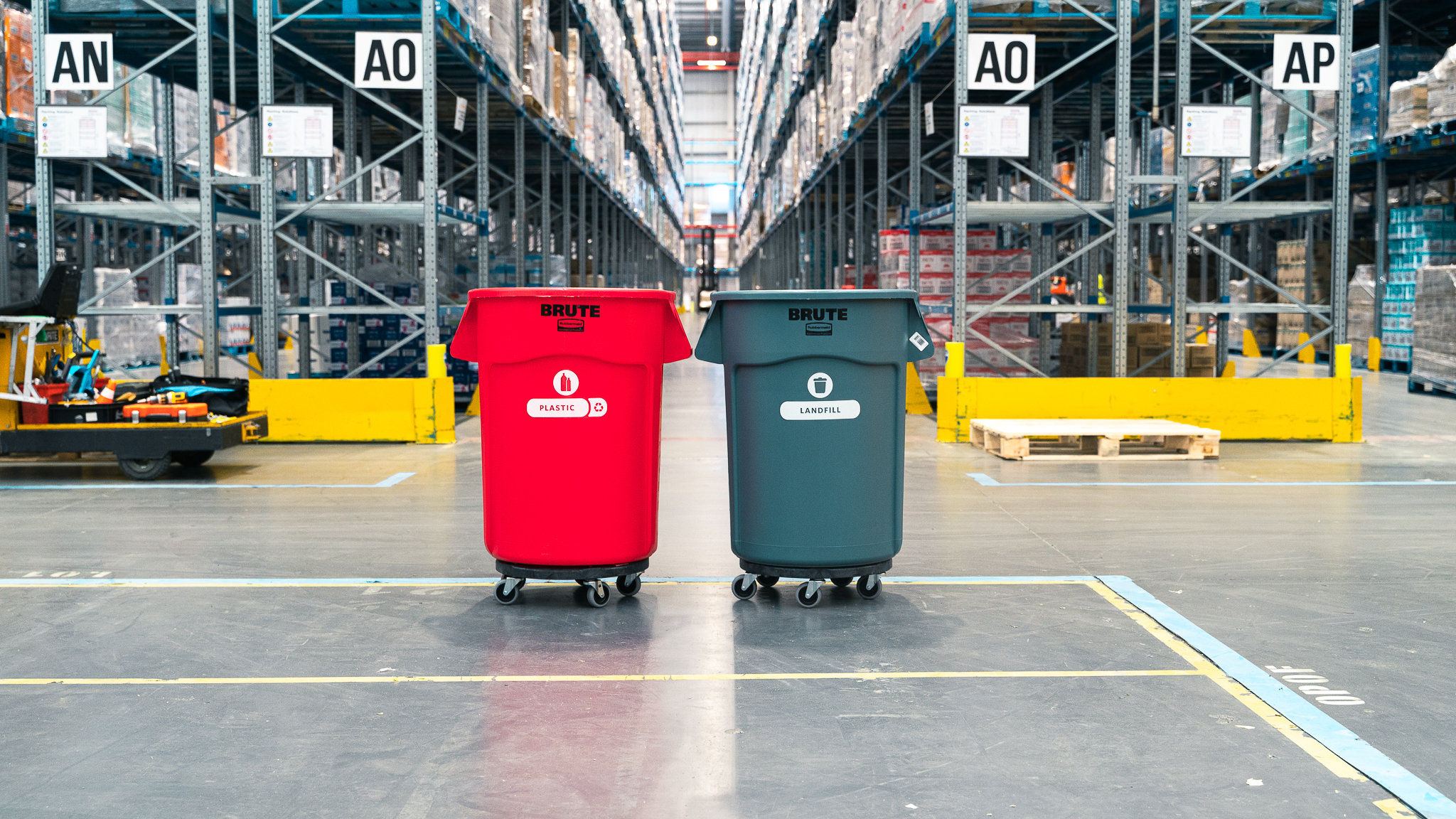
Contamination happens when operatives cannot quickly identify the right bin, or when poorly designed containers allow incorrect disposal. Your waste contractor charges for contaminated loads. Restrictive apertures, clear colour coding, and correct placement cut contamination at source.
THREE THINGS EVERY BUSINESS NEEDS TO GET RIGHT
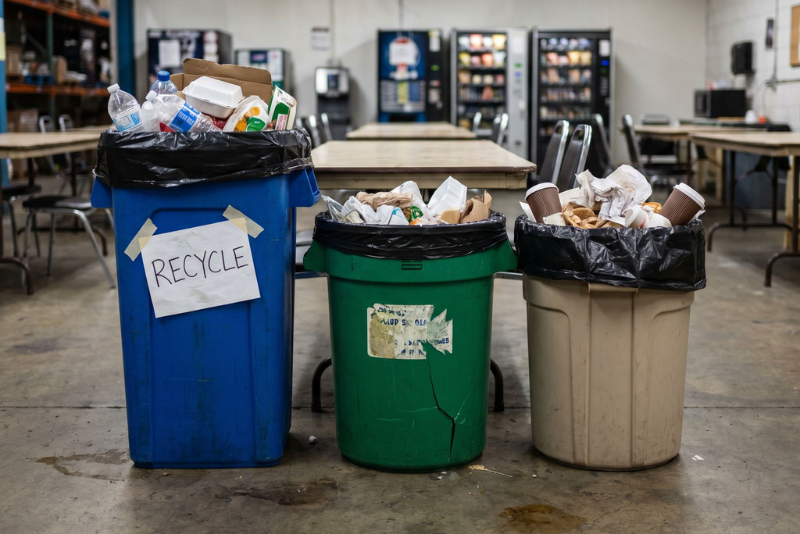
Factory and warehouse waste management fails for three consistent reasons: infrastructure that cannot handle industrial conditions, bins positioned too far from where work happens, and contamination that goes unchecked until it costs you. Here is how to fix all three.
Standard waste bins are not built for warehouses or factory floors. Forklift impacts and pallet jack collisions, for example, will crack and break budget infrastructure. Products built from durable resin absorb impact without shattering - eliminating foreign object debris risk and the replacement cycle that follows.
See The Range Read The DetailIn factory and warehouse environments, a recycling station that operatives have to walk to is one that will be ignored under pressure. Bins need to be positioned at or within a few steps of the workstation. Slim vertical containers with narrow footprints make this possible without disrupting workflow.
Find Your Solution Find Your SolutionClear colour coding and waste stream signage, and restrictive apertures that prevent incorrect disposal reduce contamination at the point of deposit. Durable products bought once and maintained could also contribute to reducing Scope 3 emissions - a benefit for ESG reporting.
Find Bins Cut ContaminationA factory or warehouse waste management plan needs to work across every zone - production floor, canteen, goods in, back of house. Here is how to approach it systematically, from initial assessment through to ongoing monitoring.

Map the facility before building a plan
Walk every zone and identify where waste is generated, in what volumes, and what type. Which locations are generating contamination? Where are operatives bypassing recycling points? Where are bins failing structurally? A zone-by-zone assessment gives you the evidence to build a plan that actually changes behaviour on the floor.

Invest in equipment that can last
On an industrial site, waste containers take punishment that office or retail environments never face. Choosing products engineered for impact resistance, pressure-washable surfaces, and secure lids means fewer failures, lower replacement frequency, and a waste system your operatives will use correctly.
Built for the demands of industrial environments
From high-volume goods-in areas to canteen break rooms and production line aisles, RCP has a range engineered for the specific conditions of factory and warehouse waste management - tough enough to last, practical enough to use correctly every shift.

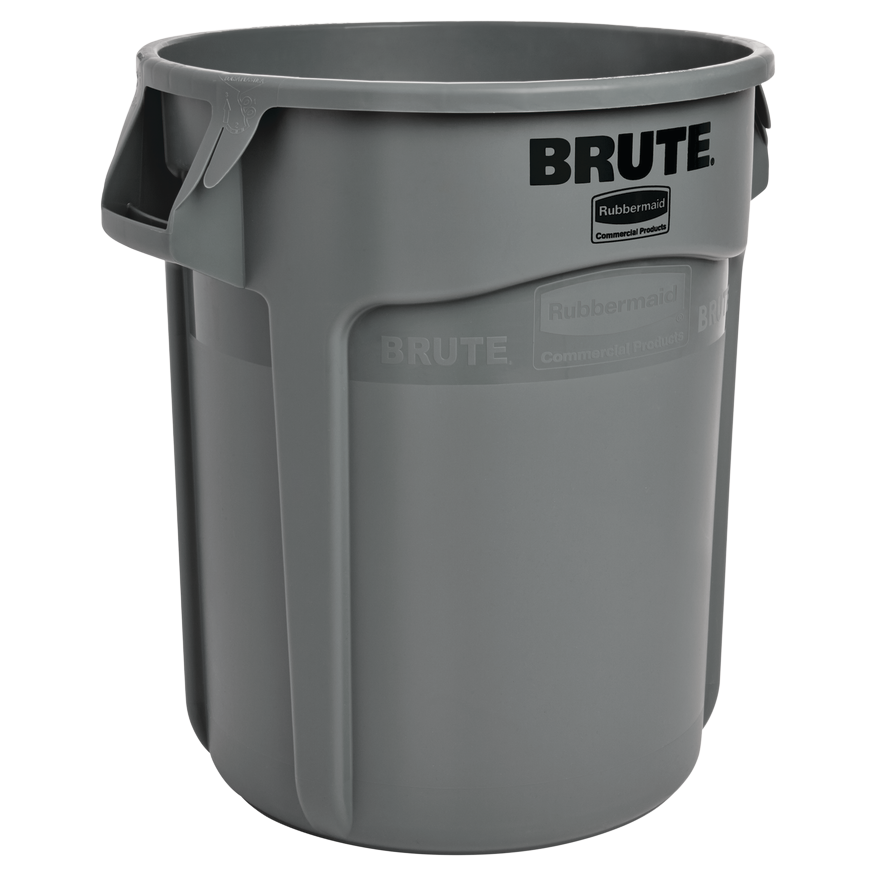
Designed to absorb forklift and pallet jack impact without shattering. The industrial standard for high-volume, high-risk waste environments. Backed by a 10-year warranty.
View Product
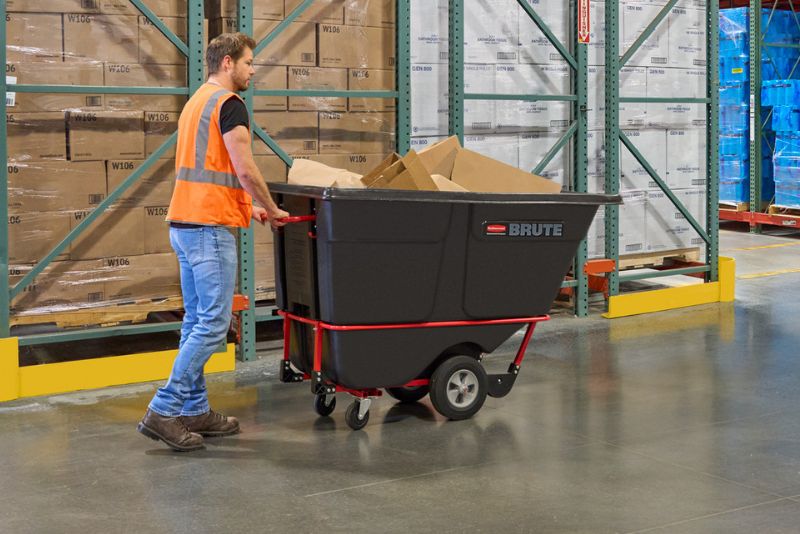
Built for moving bulk waste loads efficiently around the facility. Leakproof construction, smooth rolling castors, and capacities up to 760 litres for high-volume waste transport between collection points.
View Product
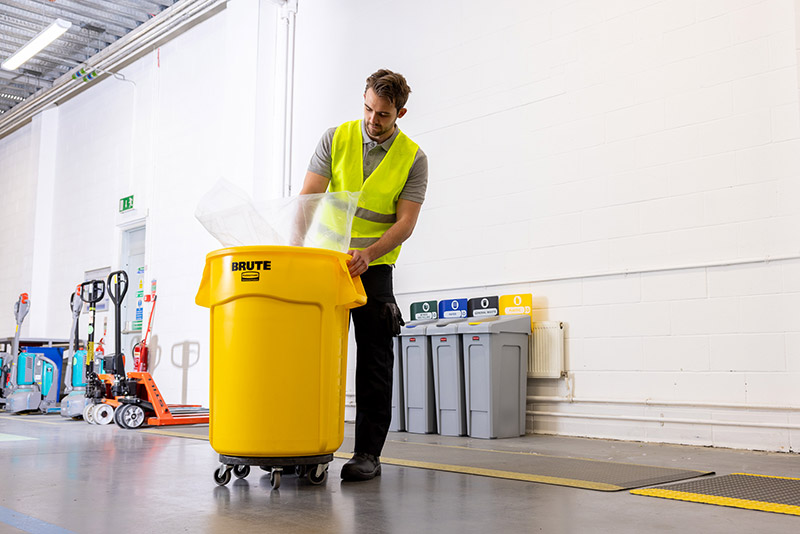
Multi-stream recycling designed for point-of-use placement. Slim vertical profile fits within aisle markings and pallet footprints, putting correct disposal within reach of every workstation.
View Products
A recycling station that works as hard on appearance as it does on compliance. Modular, slim, and built for guest-facing spaces in hotels, restaurants and venues.
View Product
Slim profile to fit easily in canteen and break room environments. Available in multiple colours with waste stream-specific labels for fast, accurate sorting under shift pressure.
View Product
Hands-free, pedal-operated food waste separation for canteen and welfare areas. Hygienic sealed design prevents pest risk in environments where food waste volumes are generated daily.
View ProductCONTACT US
Bring us to your site. We will assess your current waste setup zone by zone, identify where infrastructure is failing or missing, and recommend practical solutions sized for your operation.
Book A Waste WalkIndustrial waste is any waste produced as a result of industrial, manufacturing, or large-scale commercial activity. In a warehousing or logistics context this includes packaging waste such as cardboard, plastic film, shrink wrap, and pallets, as well as general waste, food waste from staff areas, and any hazardous materials such as chemicals, oils, or batteries. Industrial waste is subject to the same duty of care obligations as all commercial waste under the Environmental Protection Act 1990, meaning businesses are responsible for its correct separation, storage, and disposal through a registered waste carrier. Under England's Simpler Recycling legislation, warehouses with 10 or more full-time equivalent employees are already required to separate recyclable waste streams on site before collection. Mandatory separation of plastic film is not required until April 2030, but warehouses generating high volumes of plastic film packaging should begin planning for that change now.
Achieving zero-to-landfill in a warehouse requires a clear picture of every waste stream being generated on site and a disposal route for each one that diverts material away from general waste. The starting point is accurate waste separation - ensuring cardboard and paper, plastics, metals, food waste, and general waste are kept in distinct streams from the point they are produced. Contamination is the most common barrier: when recyclable materials are mixed with general waste, the entire load is often sent to landfill by default. Clearly labelled, well-positioned commercial waste and recycling bins at every waste generation point across the warehouse floor, loading bays, and staff areas make correct separation easier to maintain across every shift. Our recycling audit tool is a practical starting point for warehouses looking to identify where waste streams are being lost or contaminated. From there, working with a waste contractor who can evidence where each stream goes - and reviewing that regularly - is what turns a zero-to-landfill target into a measurable outcome.
A warehouse waste management plan should document every waste stream produced on site, how each is separated and stored, which registered waste carrier collects it, and where it goes for processing or disposal. Start by conducting a waste audit across the full site to identify what is being generated, in what volumes, and where separation is failing. From there, set out the physical infrastructure needed - the type, size, and location of waste and recycling containers across each area - alongside collection frequencies and staff responsibilities. The plan should reference your legal obligations and include a process for retaining waste transfer notes for at least two years. Review it annually or whenever operations, waste volumes, or legislation change.
The most effective warehouse waste management solutions combine the right physical infrastructure with clear processes and staff accountability. In practice, this means having commercial waste and recycling containers that are sized and positioned to match the volume and type of waste generated in each area - large-capacity bins for high-volume back-of-house areas, clearly labelled multi-stream stations at key collection points, and purpose-built containers for specific waste streams such as cardboard and food waste from staff areas. Equipment durability matters in a warehouse environment: bins and containers that crack, warp, or require frequent replacement add cost and create gaps in waste separation coverage. Our BRUTE® range is built specifically for demanding industrial environments, with impact-resistant construction and load capacities designed for high-volume use. Pairing the right equipment with regular waste audits and contractor reviews gives UK warehouse operators the clearest route to consistent, cost-effective waste management.
An effective waste management system in a warehouse starts with understanding what waste is being produced and where. The most common waste streams in a logistics or warehousing environment are cardboard and paper, plastic film and flexible packaging, metals, food waste from staff areas, and general waste. Each stream needs a dedicated, clearly labelled collection point positioned where the waste is actually generated - at packing stations, loading bays, staff canteens, and office areas. Multi-stream waste containers and recycling stations that can handle high volumes without frequent emptying reduce disruption to operations and keep waste separation consistent across long shifts. Under England's Simpler Recycling legislation, businesses with 10 or more full-time equivalent employees are already legally required to separate key waste streams on site. Mandatory plastic film separation follows in April 2030, giving warehouses time to plan the right infrastructure ahead of the deadline.
The most common types of waste generated in a logistics warehouse are cardboard and paper packaging, plastic film and flexible packaging, plastic containers and shrink wrap, metals including cans, foil, and damaged fittings, food waste from staff facilities, and general waste. Cardboard and plastic film tend to represent the highest volumes in most operations, particularly in pick-and-pack and goods-in areas.