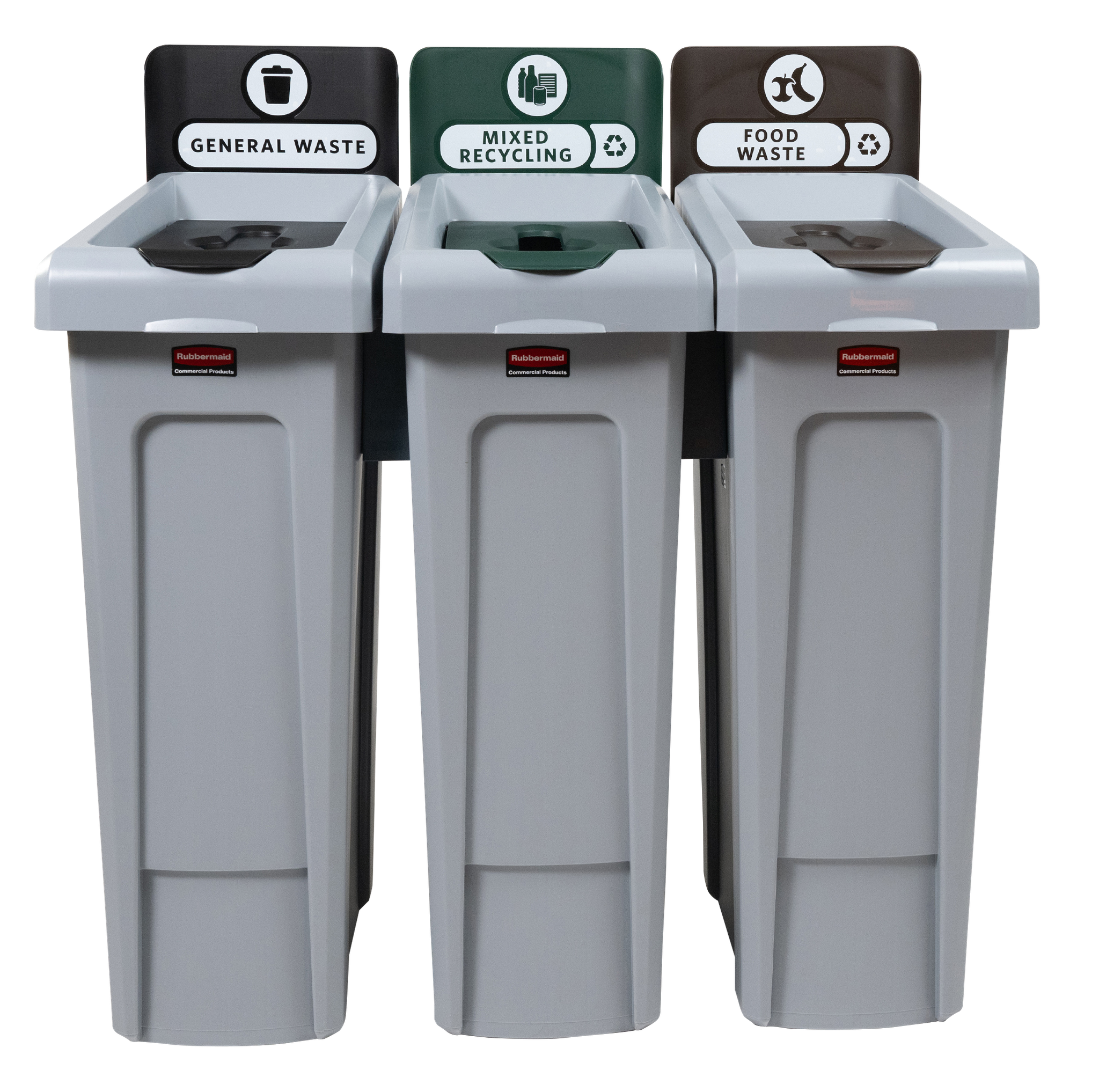
POOR WASTE MANAGEMENT COSTS YOU MORE
Effective commercial waste management is about more than having the right bins. Contaminated collections, overfull containers, broken bins and unclear signage add cost at every stage. Businesses that get this right can spend less, waste less, and carry less compliance risk.
THE REAL COST OF GETTING IT WRONG
Waste management affects your bottom line, your compliance, and your people. These are the four areas where it goes wrong most often.
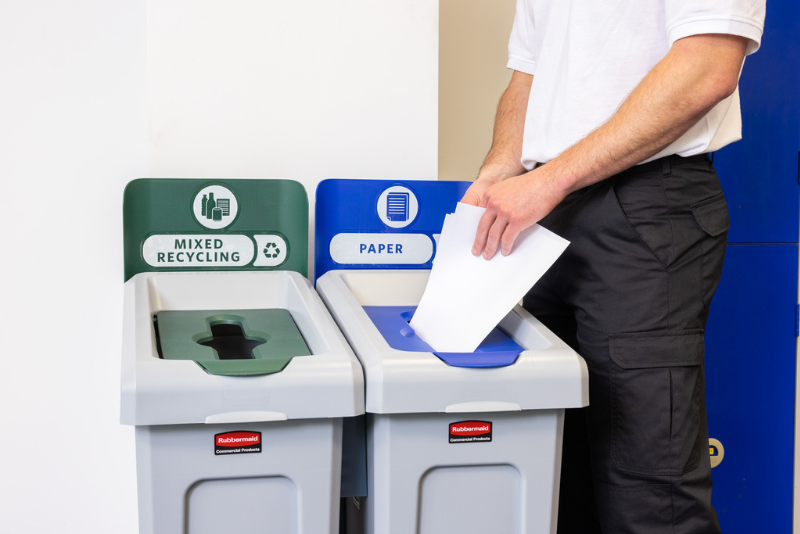
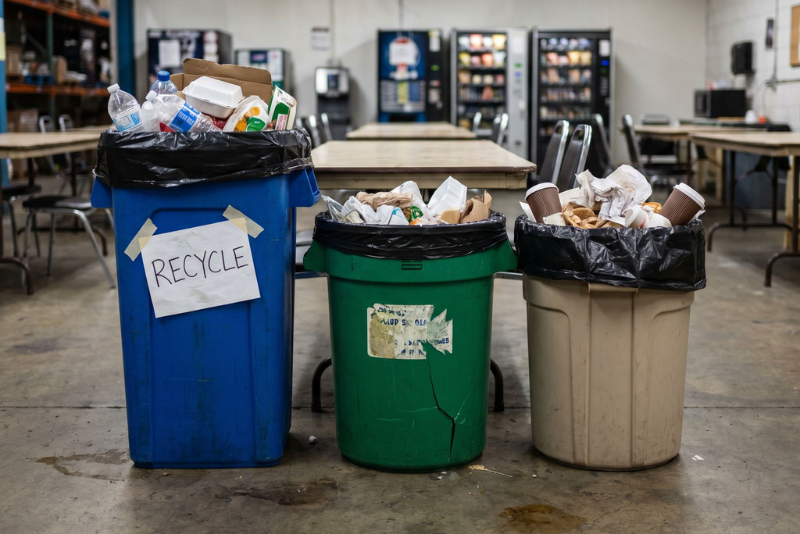
Contamination
Compliance risk
Hidden costs
Staff and safety
Contamination happens when people cannot quickly identify the right bin. Consistent colour coding, clear labels, and correctly positioned containers reduce contamination at the point of disposal.
Cut Contamination Costs
Since 31 March 2025, businesses in England with 10 or more full-time employees must separate dry recyclables, paper and card, food waste, and general waste before collection, under Simpler Recycling legislation.
Learn More
Budget waste infrastructure purchased in a hurry tends to fail under commercial conditions - cracking, breaking down, and creating replacement cycles that far exceed the original saving.
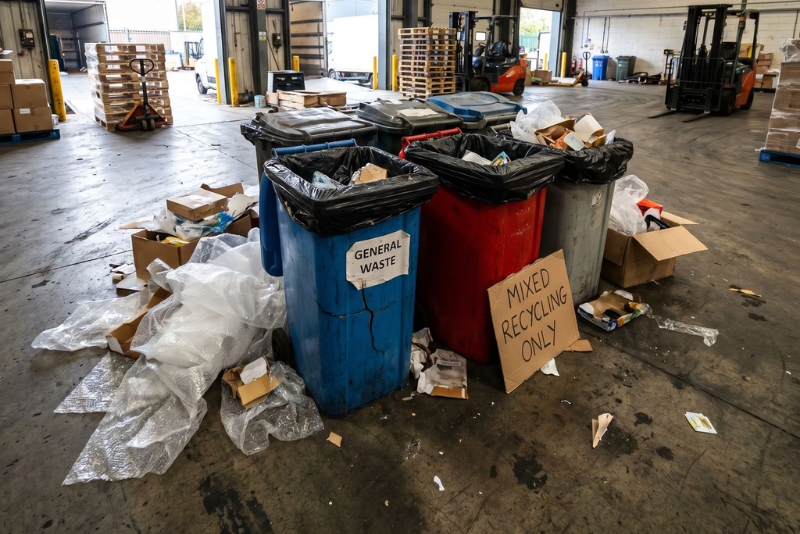
Broken containers create hazards. Bins too far from where waste is generated mean staff take shortcuts. Food waste left in open or broken containers creates hygiene risks. The right setup protects people and operations.
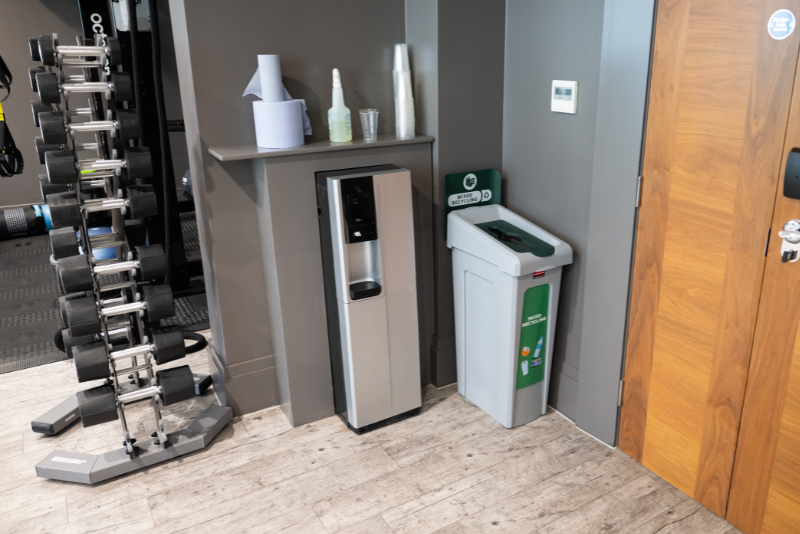
THREE THINGS EVERY BUSINESS NEEDS TO GET RIGHT
The foundations of effective commercial waste management: compliance, the right infrastructure, and contamination control.
Since 31 March 2025, all English businesses with 10 or more full-time equivalent employees must separate dry recyclables (plastic, metal and glass), paper and card, food waste, and general waste before collection. Micro-firms under 10 FTE have until March 2027 for all streams. Plastic film follows by April 2030.
Read The Detail Read The DetailCompliance depends on having the right container in the right location - where waste is actually generated, in the right capacity, with clear signage. Positioning matters as much as the product itself to ensure recyclable waste is being sent for disposal correctly.
Find Your Solution Find Your SolutionContamination happens when people cannot quickly identify the right bin. Consistent colour coding and clear signage at the point of disposal reduce errors significantly. RCP bins are available in multiple colours with waste stream-specific labels and three visual cues: symbol, icon, and text.
Find Bins Find BinsHOW TO BUILD A WASTE MANAGEMENT PLAN
A commercial waste management plan is the operational system your site runs on - not a document you write to tick a box. These are the steps that make it work in practice, from your first audit through to ongoing monitoring and improvement.

Start by assessing what you have
Map every waste point across your facility. Where is waste generated, and in what volumes? Are your containers in the right locations for the waste being produced? An honest audit is the foundation of a strong commercial waste management plan.
PRODUCTS BUILT FOR REAL WORKING SITES

Multi-stream recycling station with clear apertures and integrated signage options, built to reduce contamination at the point of disposal.
View Products
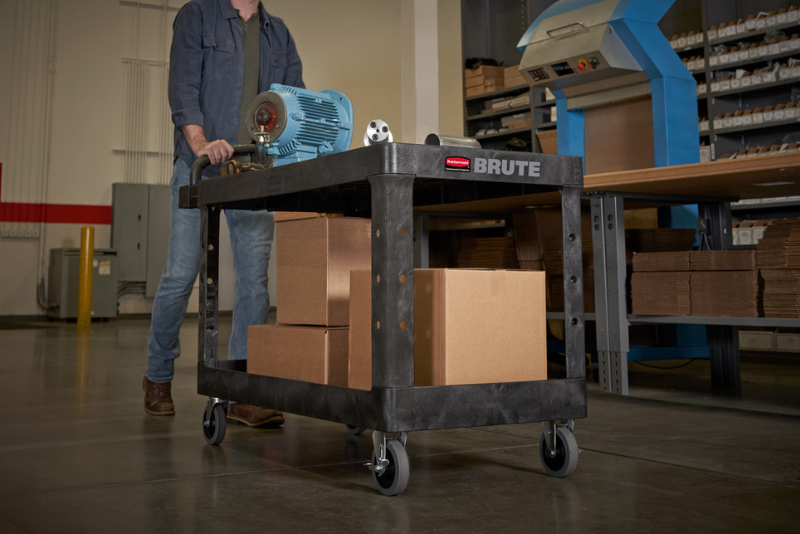
Built for the demands of high-volume, high-traffic environments. Durable, stackable, and designed to last under industrial conditions.
View Product
Hands-free pedal bin for food waste separation in kitchens, food service, and any environment where hygiene and compliance both matter daily.
View Product
Slim profile for high-traffic areas. Available in seven colours with waste stream-specific labels for clear, consistent segregation.
View Product
Premium modular recycling station with interchangeable waste stream labels and a slim footprint. Built for high-traffic commercial interiors where appearance and compliance both matter.
View Product
Flexible, colour-coded modular system available in eight colours with seven waste stream label options. Configurable to meet the needs of any recycling programme.
View Product
Aesthetically pleasing waste and recycling solutions for light traffic areas. Compact, hands-free, and designed to fit where space is limited without compromising capacity.
View ProductCONTACT US
Our team visits your site, maps your current waste setup, identifies gaps, and recommends practical solutions based on what we actually see.
Book NowCommercial waste is any waste produced by a business, trade, or commercial activity. This includes waste generated by offices, retail premises, warehouses, manufacturing facilities, hospitality venues, foodservice operations, schools, and healthcare settings. It covers a wide range of materials including food waste, paper and card, plastics, glass, metals, and general waste. Commercial waste is distinct from household waste and is subject to its own legal obligations around separation, storage, and disposal - including the requirements introduced under England's Simpler Recycling legislation.
One of the biggest challenges in commercial waste management is contamination. When non-recyclable materials are mixed into recycling streams, entire loads can be rejected and sent to general waste disposal instead. This increases costs, undermines recycling targets, and can result in non-compliance with waste separation legislation. Poor labelling, inadequate bin placement, and a lack of staff awareness are the most common causes. Having clearly labelled, well-positioned waste separation systems throughout a facility significantly reduces contamination rates and keeps waste streams clean at the point of collection.
Under the Environmental Protection Act 1990, businesses in England have a legal duty of care for their waste from the point it is produced until it is disposed of correctly. This means that if waste is disposed of incorrectly, including by a third-party waste contractor, the business that produced it can still be held liable. Businesses are required to use a registered waste carrier, ensure waste is correctly described and separated, and retain waste transfer notes for at least two years. Non-compliance can result in unlimited fines and, in serious cases, criminal prosecution. Understanding your legal obligations under England’s recycling legislation is the first step to managing that risk.
The five main types of commercial waste are general waste, recyclable waste (including plastics, glass, and metals), paper and card, food waste, and hazardous waste. Under England's Simpler Recycling legislation, businesses with 10 or more full-time equivalent employees are legally required to separate the first four of these streams on site before collection. Hazardous waste - which includes chemicals, batteries, and certain electrical equipment - is subject to separate and stricter disposal regulations. Getting the right commercial waste and recycling bins in place for each stream is the most practical starting point for any business working towards full compliance.
No, burning commercial waste is illegal in England in almost all circumstances. Open burning of commercial waste is prohibited under the Environmental Protection Act 1990 and the Clean Air Act 1993, and can result in significant fines and prosecution. Incineration of commercial waste is only permitted at licensed facilities that meet strict emissions standards. Businesses found burning waste on site - including on agricultural or industrial land - risk enforcement action from the Environment Agency. The correct route for disposing of commercial waste is through a registered waste carrier who can ensure it is processed, recycled, or disposed of lawfully.