Poor warehouse waste management costs more than you think
Warehouse and factory waste management is not just a compliance issue. Bins that crack under industrial conditions, contamination penalties from your waste contractor, and operatives walking too far to reach recycling points all add cost to every shift. Getting the setup right protects your people, your operation, and your bottom line.
WHERE warehouse waste management GOES WRONG
Waste management on industrial sites affects safety, throughput, compliance, and cost. These are the four areas where facilities run into the most trouble.
Safety hazards
Throughput loss
Compliance risk
Contamination fees
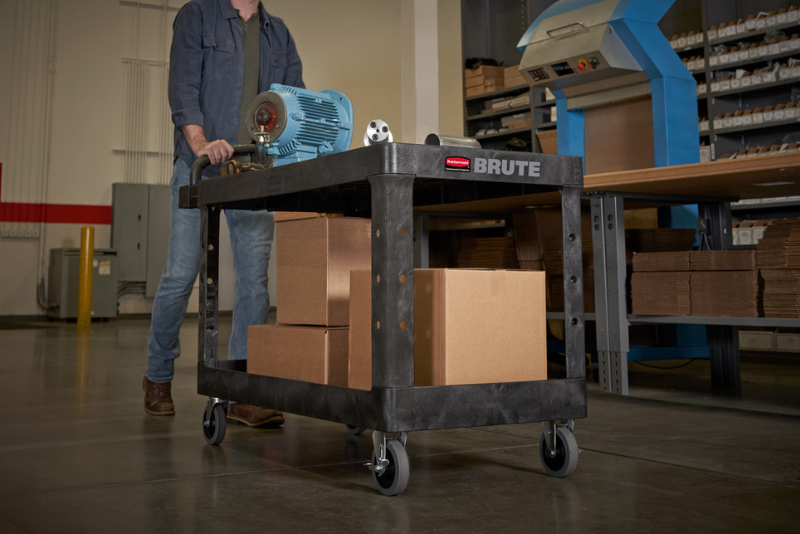
Bins that crack or shatter under forklift impact create foreign object debris on the warehouse floor. That is not a maintenance issue - it is a safety incident waiting to happen. Infrastructure built to withstand industrial conditions eliminates this risk before it reaches your incident
See Durable Solutions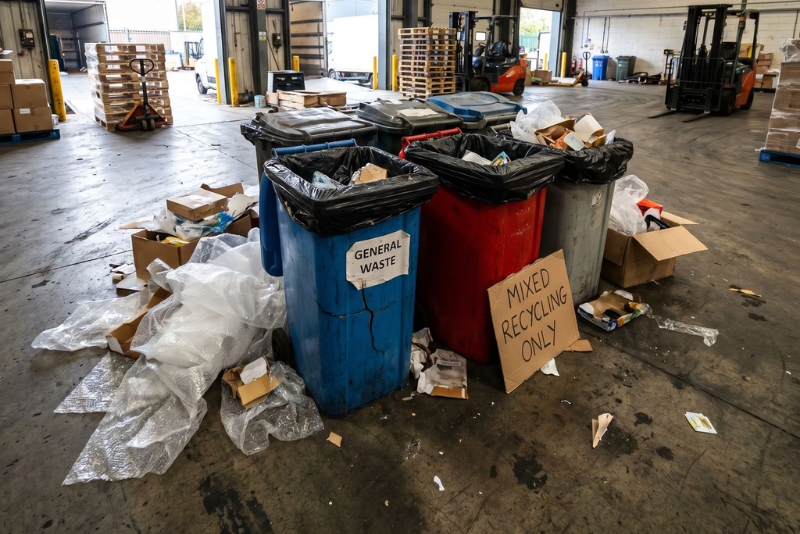
Every time an operative walks further than necessary to reach a recycling point, productive time is lost. On a busy warehouse floor, poorly positioned waste stations create LEAN violations that add up to hundreds of lost picks per day. Point-of-use placement fixes this.
Improve Efficiency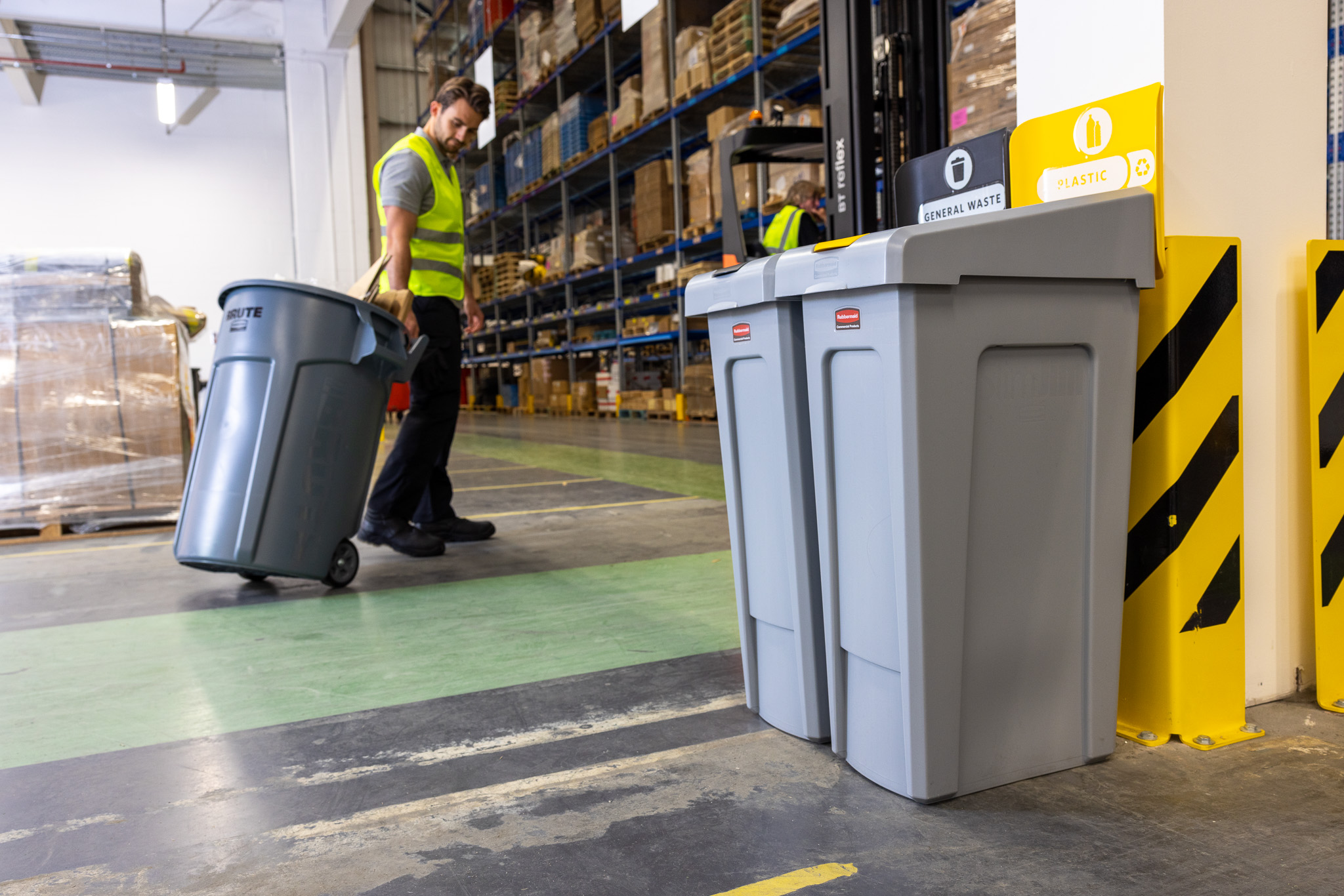
Since 31 March 2025, businesses in England with 10 or more full-time employees must separate dry recyclables, paper and card, food waste, and general waste before collection under Simpler Recycling legislation. Industrial facilities are fully in scope.
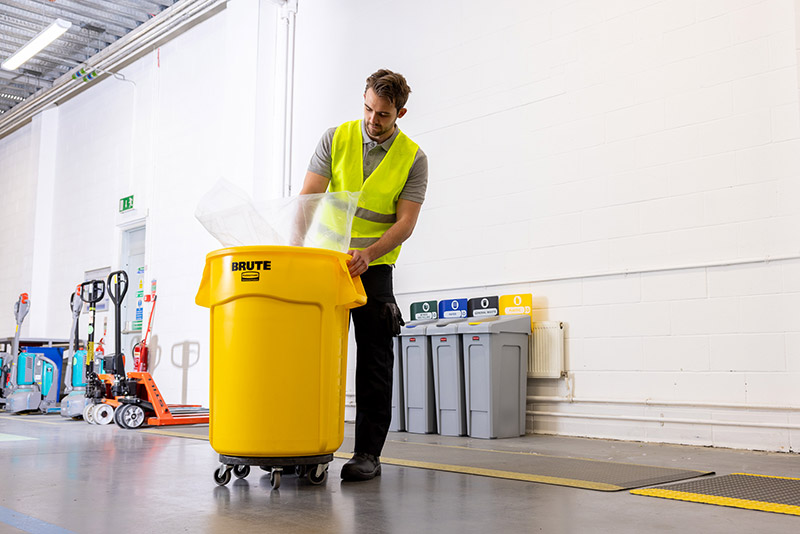
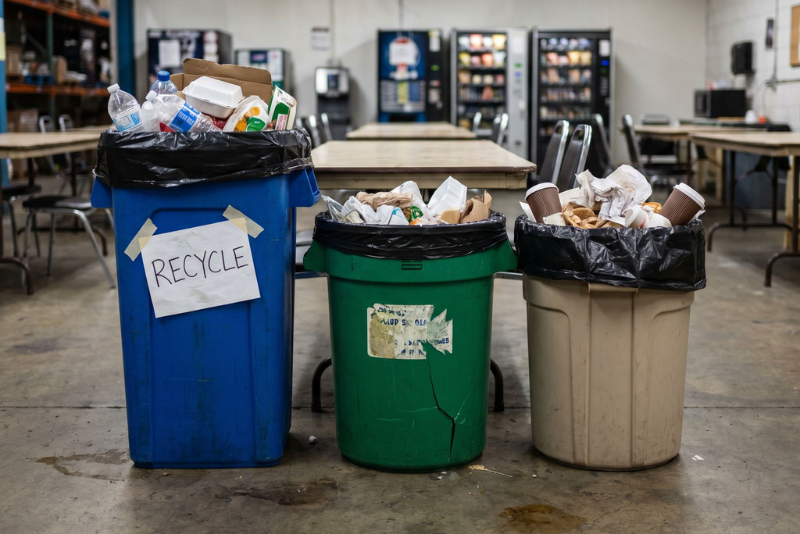
Contamination happens when operatives cannot quickly identify the right bin, or when poorly designed containers allow incorrect disposal. Your waste contractor charges for contaminated loads. Restrictive apertures, clear colour coding, and correct placement cut contamination at source.
THREE THINGS EVERY BUSINESS NEEDS TO GET RIGHT
Factory and warehouse waste management fails for three consistent reasons: infrastructure that cannot handle industrial conditions, bins positioned too far from where work happens, and contamination that goes unchecked until it costs you. Here is how to fix all three.
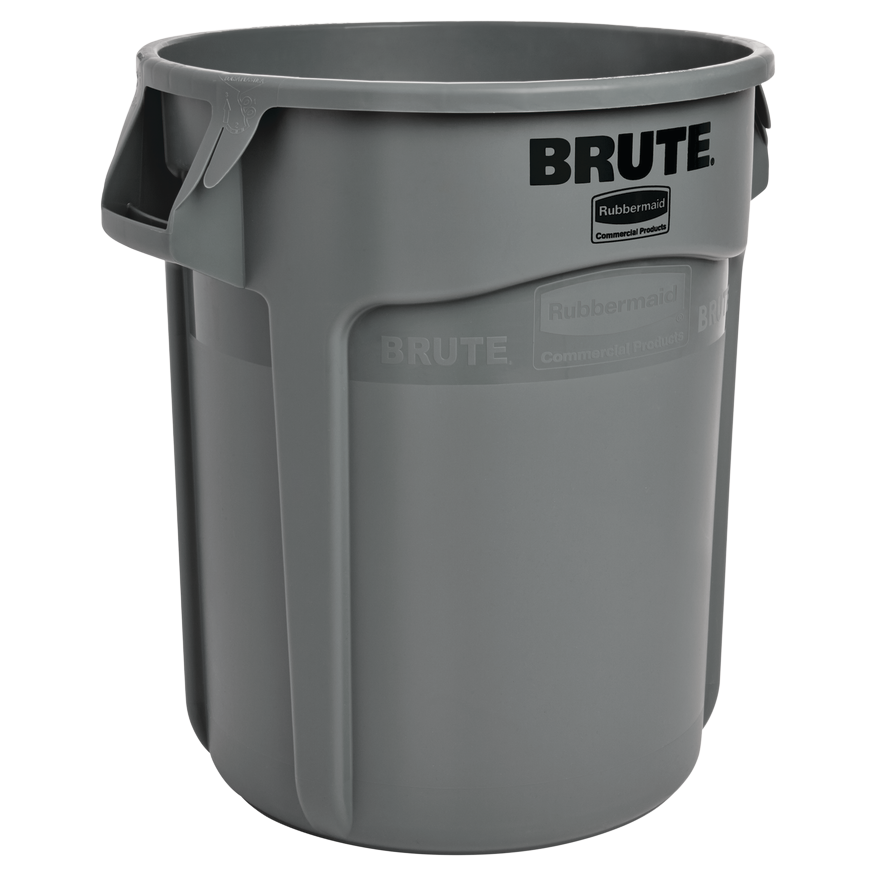
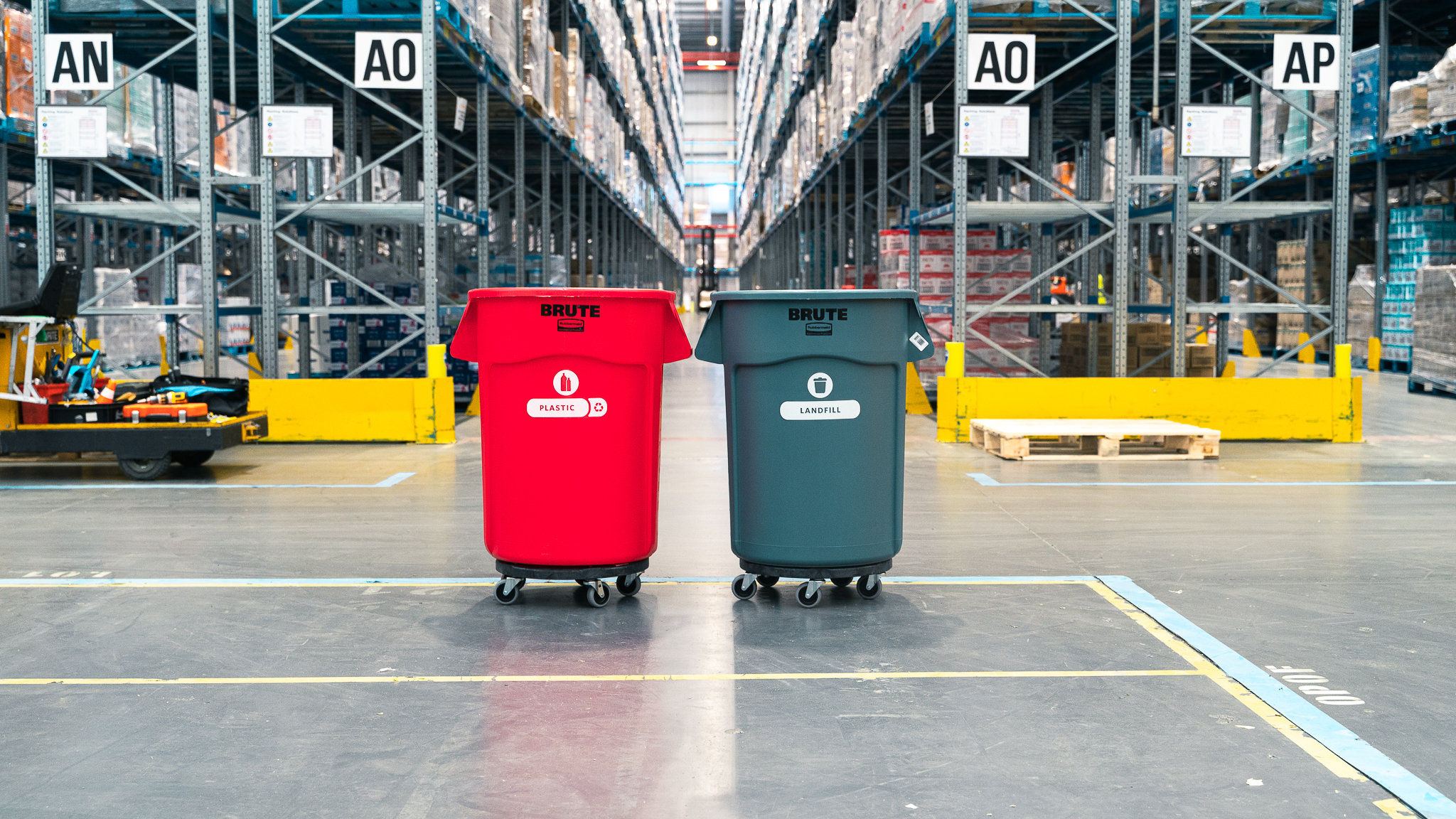
Standard waste bins are not built for warehouses or factory floors. Forklift impacts and pallet jack collisions, for example, will crack and break budget infrastructure. Products built from durable resin absorb impact without shattering - eliminating foreign object debris risk and the replacement cycle that follows.
See The Range Read The DetailIn factory and warehouse environments, a recycling station that operatives have to walk to is one that will be ignored under pressure. Bins need to be positioned at or within a few steps of the workstation. Slim vertical containers with narrow footprints make this possible without disrupting workflow.
Find Your Solution Find Your SolutionClear colour coding and waste stream signage, and restrictive apertures that prevent incorrect disposal reduce contamination at the point of deposit. Durable products bought once and maintained could also contribute to reducing Scope 3 emissions - a benefit for ESG reporting.
Find Bins Cut ContaminationA factory or warehouse waste management plan needs to work across every zone - production floor, canteen, goods in, back of house. Here is how to approach it systematically, from initial assessment through to ongoing monitoring.

Map the facility before building a plan
Walk every zone and identify where waste is generated, in what volumes, and what type. Which locations are generating contamination? Where are operatives bypassing recycling points? Where are bins failing structurally? A zone-by-zone assessment gives you the evidence to build a plan that actually changes behaviour on the floor.

Invest in equipment that can last
On an industrial site, waste containers take punishment that office or retail environments never face. Choosing products engineered for impact resistance, pressure-washable surfaces, and secure lids means fewer failures, lower replacement frequency, and a waste system your operatives will use correctly.
Built for the demands of industrial environments
From high-volume goods-in areas to canteen break rooms and production line aisles, RCP has a range engineered for the specific conditions of factory and warehouse waste management - tough enough to last, practical enough to use correctly every shift.

Designed to absorb forklift and pallet jack impact without shattering. The industrial standard for high-volume, high-risk waste environments. Backed by a 10-year warranty.
View Product
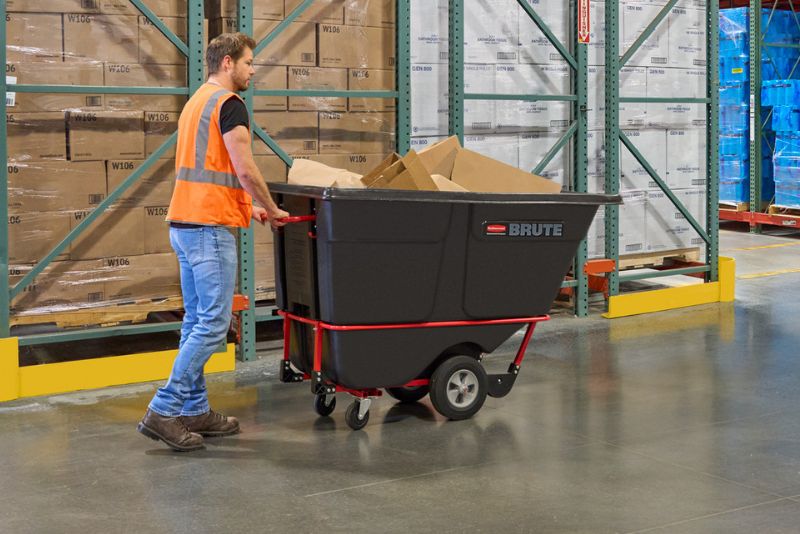
Built for moving bulk waste loads efficiently around the facility. Leakproof construction, smooth rolling castors, and capacities up to 760 litres for high-volume waste transport between collection points.
View Product
Multi-stream recycling designed for point-of-use placement. Slim vertical profile fits within aisle markings and pallet footprints, putting correct disposal within reach of every workstation.
View Products
A recycling station that works as hard on appearance as it does on compliance. Modular, slim, and built for guest-facing spaces in hotels, restaurants and venues.
View Product
Slim profile to fit easily in canteen and break room environments. Available in multiple colours with waste stream-specific labels for fast, accurate sorting under shift pressure.
View Product
Hands-free, pedal-operated food waste separation for canteen and welfare areas. Hygienic sealed design prevents pest risk in environments where food waste volumes are generated daily.
View ProductCONTACT US
Bring us to your site. We will assess your current waste setup zone by zone, identify where infrastructure is failing or missing, and recommend practical solutions sized for your operation.
Book A Waste Walk