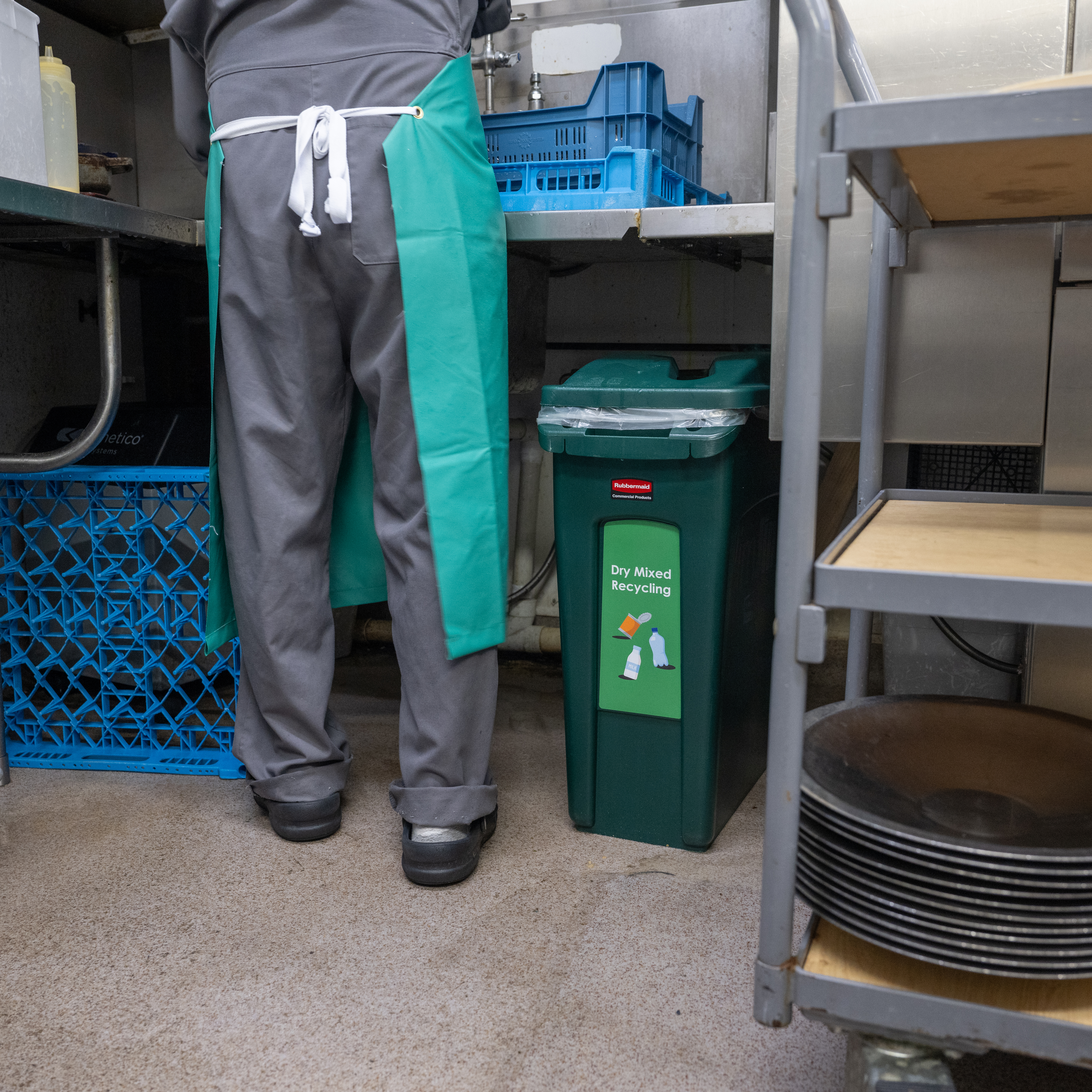

How much is bad waste management costing you?
Effective waste and recycling management in hospitality is about more than having the right bins. Cross-contamination, overflowing bins during peak service, and unclear signage add cost at every stage. Operations that get this right waste less time and money, and carry less compliance and reputational risk.
COST OF GETTING IT WRONG
Waste management in hospitality affects your budgets, your compliance, and your guests. These are the four areas to watch out for when looking to reduce your risk.
Contamination
Compliance risk
Hidden costs
Staff and service
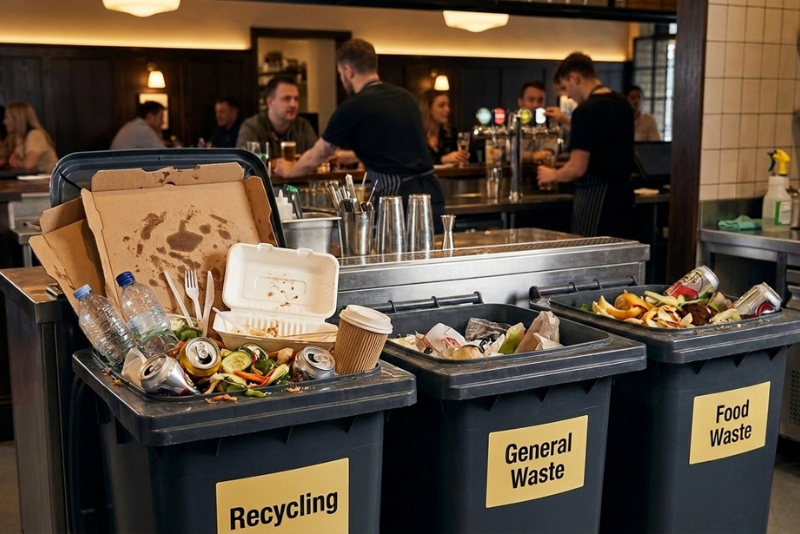
Contamination happens fast during a busy service. When staff cannot quickly identify the right bin under pressure, the wrong waste goes in the wrong place. Consistent colour coding, clear labels, and correctly positioned containers reduce contamination at the point of disposal.
Cut Contamination Costs
Since 31 March 2025, hospitality and foodservice businesses in England with 10 or more full-time employees must separate dry recyclables, paper and card, food waste, and general waste before collection, under Simpler Recycling legislation.
Learn More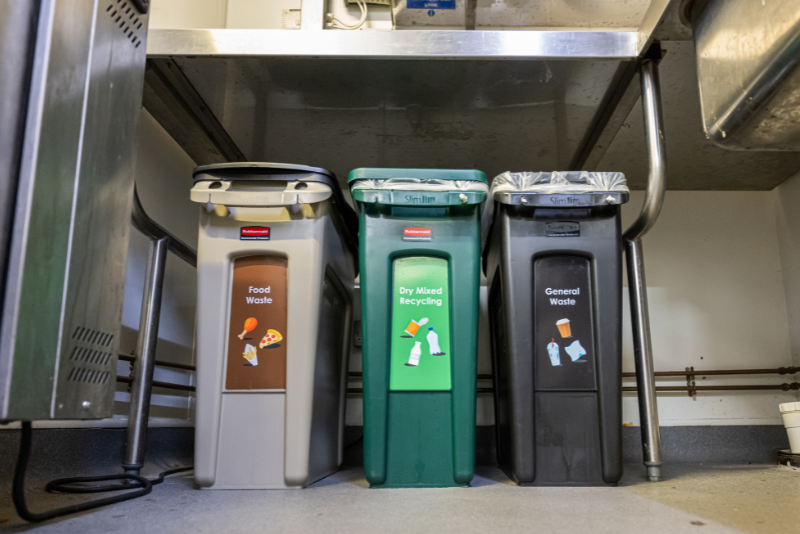
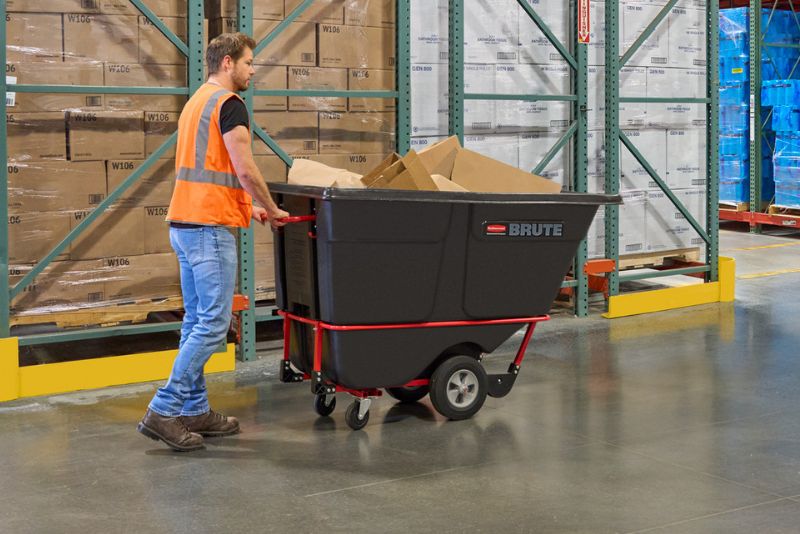
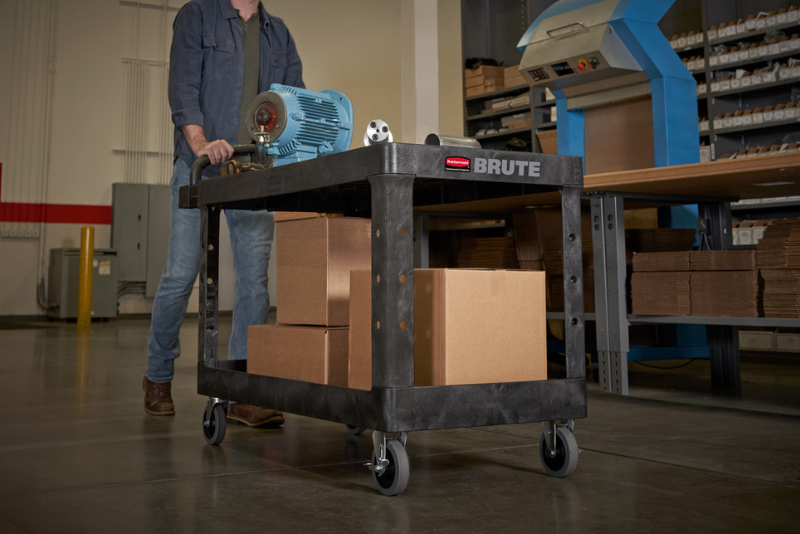
Cheap waste and recycling bins tend to struggle to keep up with demands of a commercial kitchen or bar - cracking, breaking down, and creating replacement cycles that far exceed the original saving. Durable containers are a smarter long-term choice.
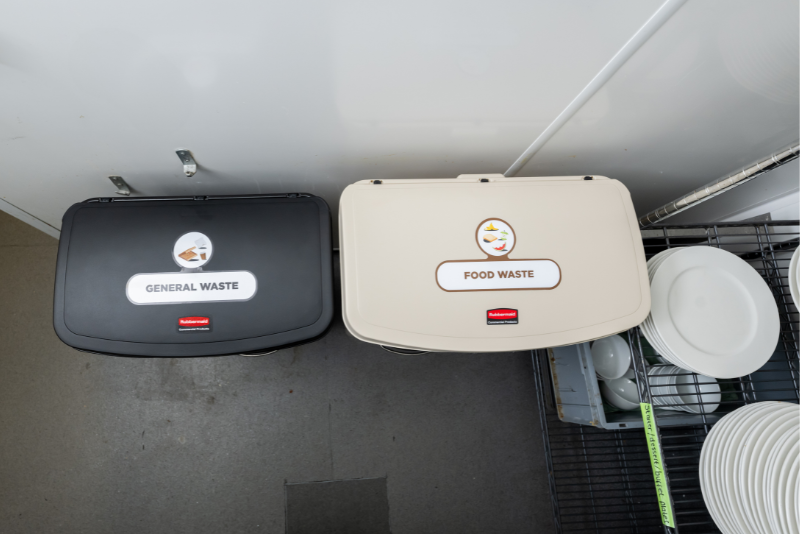
Bins located too far from where waste is generated mean staff take shortcuts during service. Food waste left in open or broken containers creates hygiene and pest risks. The right setup protects your team, your guests, and your reputation.
Top three waste management things hospitality businesses must consider
The fundamentals of effective restaurant and hotel waste management: compliance, the right infrastructure, and contamination control.
Since 31 March 2025, all English businesses with 10 or more full-time equivalent employees must separate dry recyclables - plastic, metal and glass - paper and card, food waste, and general waste before collection. Micro-firms under 10 FTE have until March 2027 for all streams. Plastic film follows by April 2030.
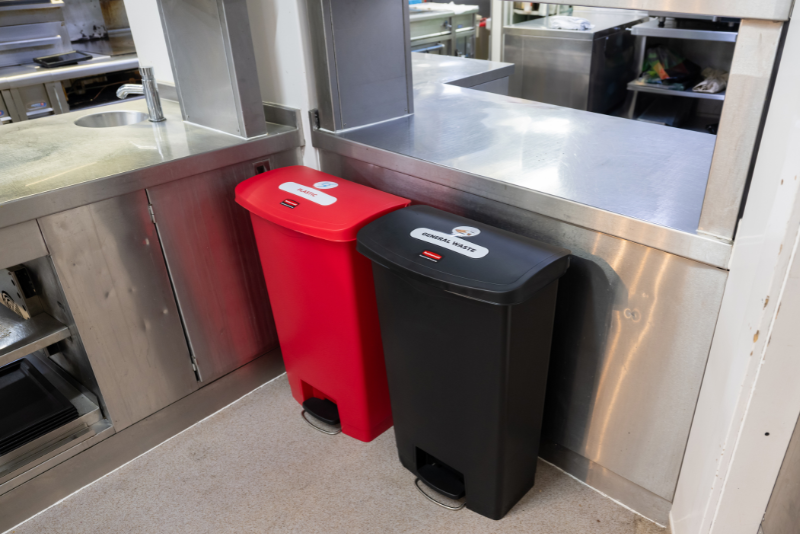
Read The Detail Read The DetailCompliance depends on having the right container where waste is actually generated – food waste in the kitchen, glass behind the bar, and in mixed recycling in guest-facing areas. Positioning matters as much as the product if you’re to make recycling as easy as possible.
Find Your Solution Find Your SolutionContamination happens when staff under service pressure cannot quickly identify the right bin. Consistent colour coding and clear signage at the point of disposal makes correct recycling easier. RCP bins are available in multiple colours with waste stream-specific labels and three visual cues: symbol, icon, and text.
Find Bins Find binsWhether you run a hotel, restaurant, pub, or catering operation, the same principle applies: a waste system that works during a quiet Tuesday will not necessarily hold up on a Saturday night. Here is how to build one that does.

Know what you are working with
Walk your operation and identify every point where waste is generated - kitchen prep, bar service, guest areas, back of house. Note volumes, waste streams and locations. What works during quiet periods and what breaks down under service pressure? That gap is where to start.

Get equipment that can handle the rush
In hospitality, waste infrastructure takes a battering. Foot pedals snap, lids get propped open, containers crack under heat or heavy use. Choosing products built for the pace and volume of a working kitchen or bar means fewer failures, less maintenance, and a system your team can actually use.
The range built for hospitality demands
Tight spaces, high volumes, guest-facing areas, and back-of-house intensity. RCP products are designed around the specific challenges of hotel and restaurant waste management, from food waste recycling in the kitchen to front of house multi-stream stations.

Designed for where space is at a premium. Fits under counters, in kitchen runs, and behind bars. Seven colours with waste stream labels for fast, accurate sorting.
View Product
Pedal-operated and hands-free. Keeps food waste contained and hygienic in busy kitchen and food service environments where cross-contamination risk is high.
View Products
A recycling station that works as hard on appearance as it does on compliance. Modular, slim, and built for guest-facing spaces in hotels, restaurants, and venues.
View Product
Multi-stream recycling for front-of-house environments. Eight colours, seven waste stream label options, and a modular design that adapts as your recycling programme grows.
View Product
When back-of-house waste volumes are high and conditions are tough, BRUTE® takes it. Built to last through the demands of a commercial kitchen without cracking or failing.
View Product
Where space is limited and appearance matters. Compact, hands-free containers for light traffic areas that keep waste managed without taking over the room.
View ProductCONTACT US
Bring us to your site. We will assess your current waste setup zone by zone, identify where infrastructure is failing or missing, and recommend practical solutions sized for your operation.
Book A Waste Walk