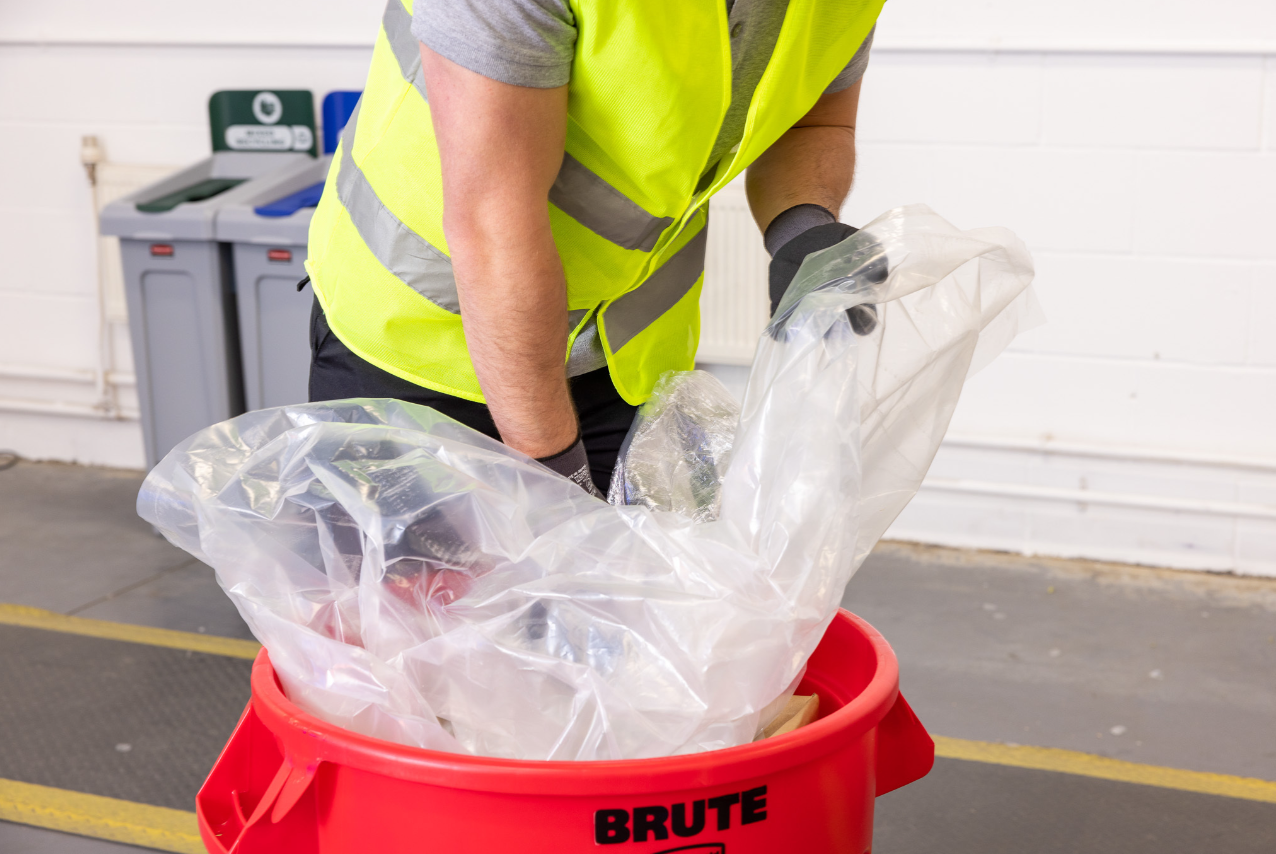
In March 2025, Simpler Recycling was rolled out in England. The legislation, which requires businesses with more than 10 full-time employees to separate recyclable waste, created a rush among operators in the manufacturing, warehousing and logistics sectors as they worked to comply with changing regulations.
But that was just the start of the journey.
More regulatory change is on the horizon, including an expansion to Simpler Recycling that will have a significant impact on the warehouse and logistics sector.
What’s changing?
From 31 March 2027, all businesses will be legally required to separately collect plastic film and plastic bags in addition to the existing waste streams – paper and cardboard, mixed dry recyclables and food - that were introduced in 2025.
The move, which is part of the country’s push towards a circular economy, represents a real challenge for operations that generate a significant volume of plastic waste.
Pallet wrap alone accounts for a substantial portion of the waste stream in most operations. With more than 150,000 tonnes of it used in the UK every year, the sheer volume of plastic film generated in a typical facility means businesses will need to seriously reconsider their waste management.
Are you ready?
Unlike some regulatory changes that place responsibility on the shoulders of contractors or waste partners, the responsibility for 2027’s plastic film recycling will fall to you. That means you will need to ensure the infrastructure to collect, store and hand off plastic film will be in place before the deadline arrives.
But the reality is that most operators simply aren’t ready.
That’s because much of the infrastructure that was built during the 2025 Simpler Recycling rollout was never designed to last. Instead, deadlines drove decisions and short-term budgets overrode best practice. The result is a network of systems already under strain, issues that will only get worse when you add the additional pressure of plastic film collection on top of them.
How to get plastic wrap ready
No matter how much thought, planning and preparation went into its creation, the waste management you put in place to meet the requirements of Simpler Recycling may be outdated 12 months down the line. So now is the perfect opportunity to revisit your systems to make sure they’re operating as efficiently as possible.
A plastic film readiness assessment can be a great starting point.
This is an opportunity to take stock of your existing infrastructure, to examine what is working and what might need improving before plastic wrap recycling is layered on top of it. Not only will this help you to meet 2027’s requirements, it will also help you to fix any shortfalls, upgrade any equipment that’s not meeting the mark and fix issues your system currently faces.
Getting ahead of the curve
Compliance shouldn't be viewed as a finish line, instead, the very best facilities use it as a foundation on which they can build and refine their waste management systems which can also see reduced waste disposal costs.
That means meeting 2027’s plastic mandate doesn’t simply mean adding complexity and cost to your operation. It’s an opportunity. A chance to build a recycling infrastructure that works, one that reduces hazards, supports sustainability goals, and delivers for your operation.
Want to see what’s working, and what can be improved? Take a waste walk. Our free checklist can help you ensure your facility is compliant and that your waste management is as efficient as possible. Looking ahead to the plastic waste recycling mandate you can assess the volumes and locations of this type of waste, along with routes needed to transport it from internal areas to your back-of-house bins.
Share on Social Media