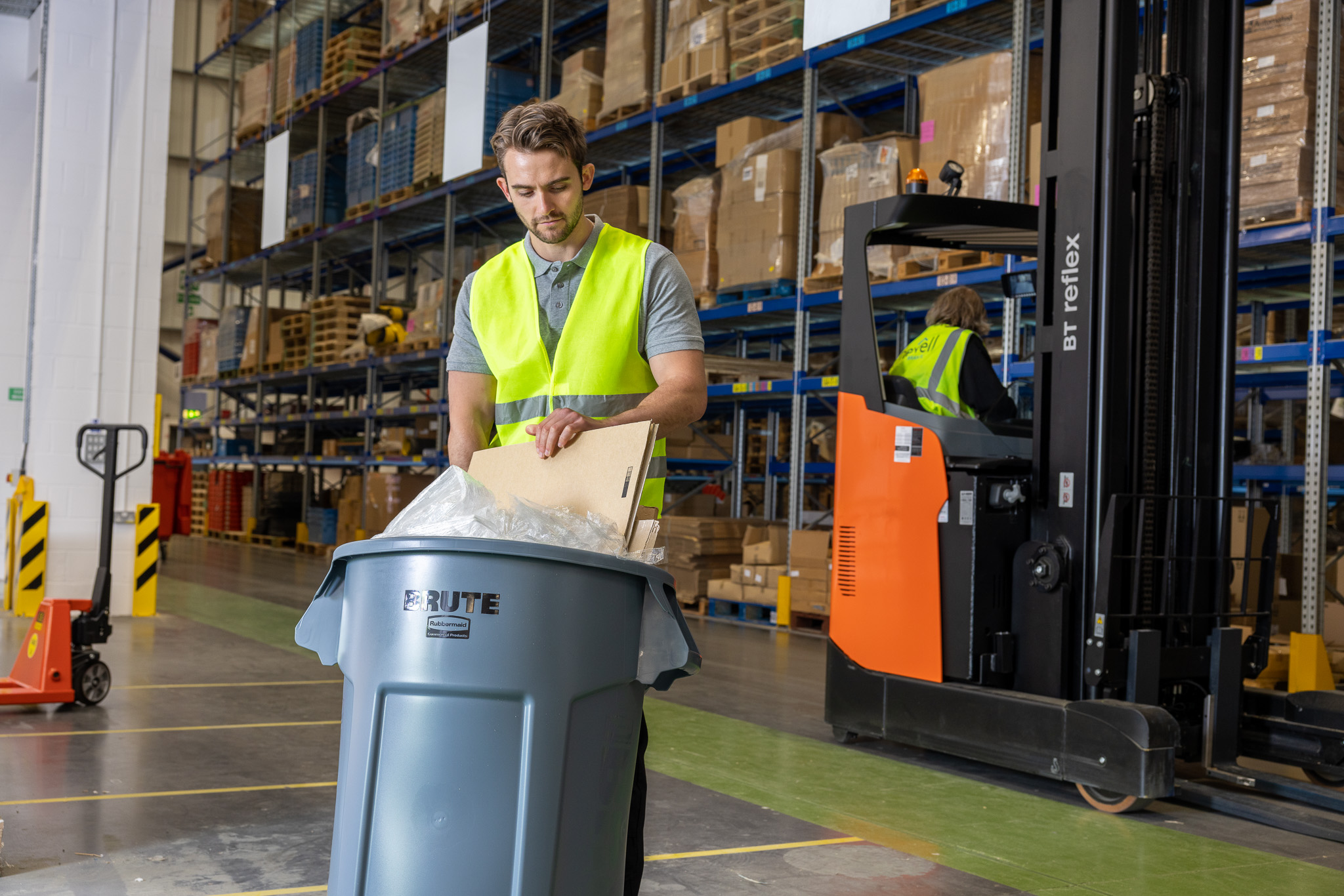
2025 saw seismic changes for the warehouse and logistics sector, as the implementation of Simpler Recycling impacted facilities across the country. But in the rush to achieve compliance, many facilities overlooked capability and the long-term impact that their newly minted waste layouts might have on operations.
A year on, these layouts might no longer be as efficient as they can be. Many are creating more issues than they solve, draining productivity and directly impacting throughput efficiency, P&L and wastage.
So, what do bad waste layouts look like, and what can you do to stop them from draining your operations?
Inefficient layouts
In facilities where waste is managed from centralised bins, inefficiencies can quickly develop as workers are forced to make repeated trips, directly impacting productivity.
Even small inefficiencies can quickly add up to become significant issues. Let’s say a packer makes four or five trips to these centralised bins per hour; that may only seem like a few minutes that are lost, but across an entire team, it can add up to dozens of hours of non-productive time each day. That’s potentially hundreds of picks that are being left on the table.
The solution - The key to overcoming the inefficiencies of centralised waste layouts is to find solutions that work where your people do. That means you need streamlined, adaptable bins that can fit anywhere in your facility, cutting down on repeat trips to centralised locations.
Our Slim Jim® Recycling Stations were developed to work around you. Combining durable design, innovative features and a reduced footprint to support efficient waste separation in any environment.
The Slim Jim® range is also adaptable, which means you can simply add new bins and additional waste streams without having to start again. It’s the perfect way to customise your waste layouts to your surroundings and future-proof your waste management.
Disruption
Badly designed waste layouts in warehouses and logistics don’t just lead to inefficiencies; they can also contribute to disruption. Poorly labelled bins are a particular problem and can easily lead to cross-contamination that directly impacts recycling rates.
This isn't just an issue in the here and now, but also a challenge as facilities look to the future. Legislation is set to change again in October when Digital Waste Tracking goes live. Though it’s primarily aimed at receiving sites, access to auditable data will increase scrutiny across the supply chain, which makes tackling contamination a top priority for warehouse and logistics operators over the coming months.
The solution - One of the simplest and most efficient ways to make your recycling system clearer is to use effective labelling. From colour-coding to custom posters, there are a number of tools to help your employees sort and separate their waste at the point of collection. The impact can be significant, with effective labelling reducing the disruption and contamination that comes from poorly designed systems.
Our self-serve label customisation portal has been designed to be fast and easy to use. You can create labels for a variety of our bins, choosing from standard designs or personalised templates to create labelling that’s unique to you.
Fix your bad layouts for good
March will mark a year since the arrival of Simpler Recycling. It’s the perfect opportunity for industrial facilities to take stock of their waste layouts, looking beyond compliance to see if their systems are quietly draining their productivity.
By acting now you can address issues within your current setup, directly impacting throughput, profitability and recycling rates. You can also futureproof your setup, implementing the adaptability you need to adjust to changing legislation.
To find out how customisable multi-stream recycling systems can fix your waste layout get in touch with our experts. You can also check out our blog to read more recycling tips and industry insights.
Share on Social Media